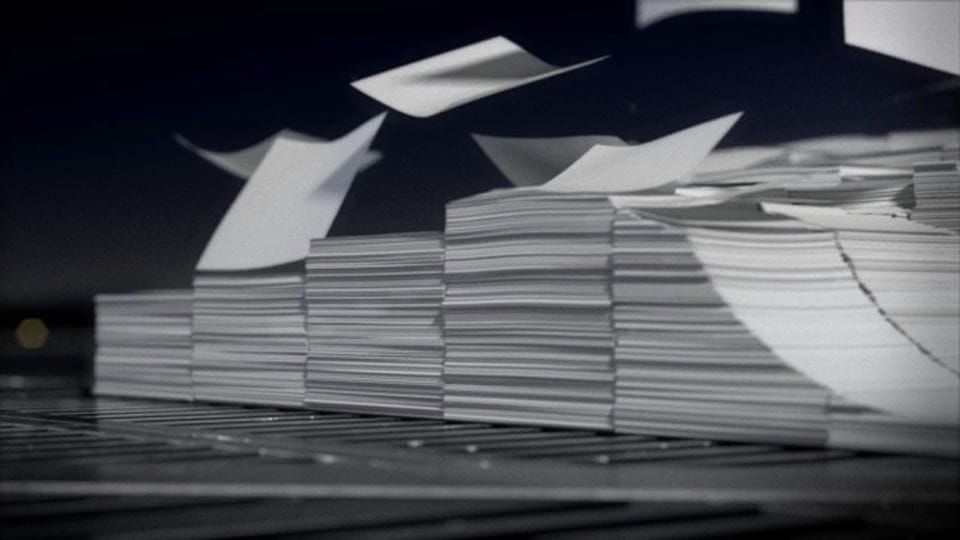
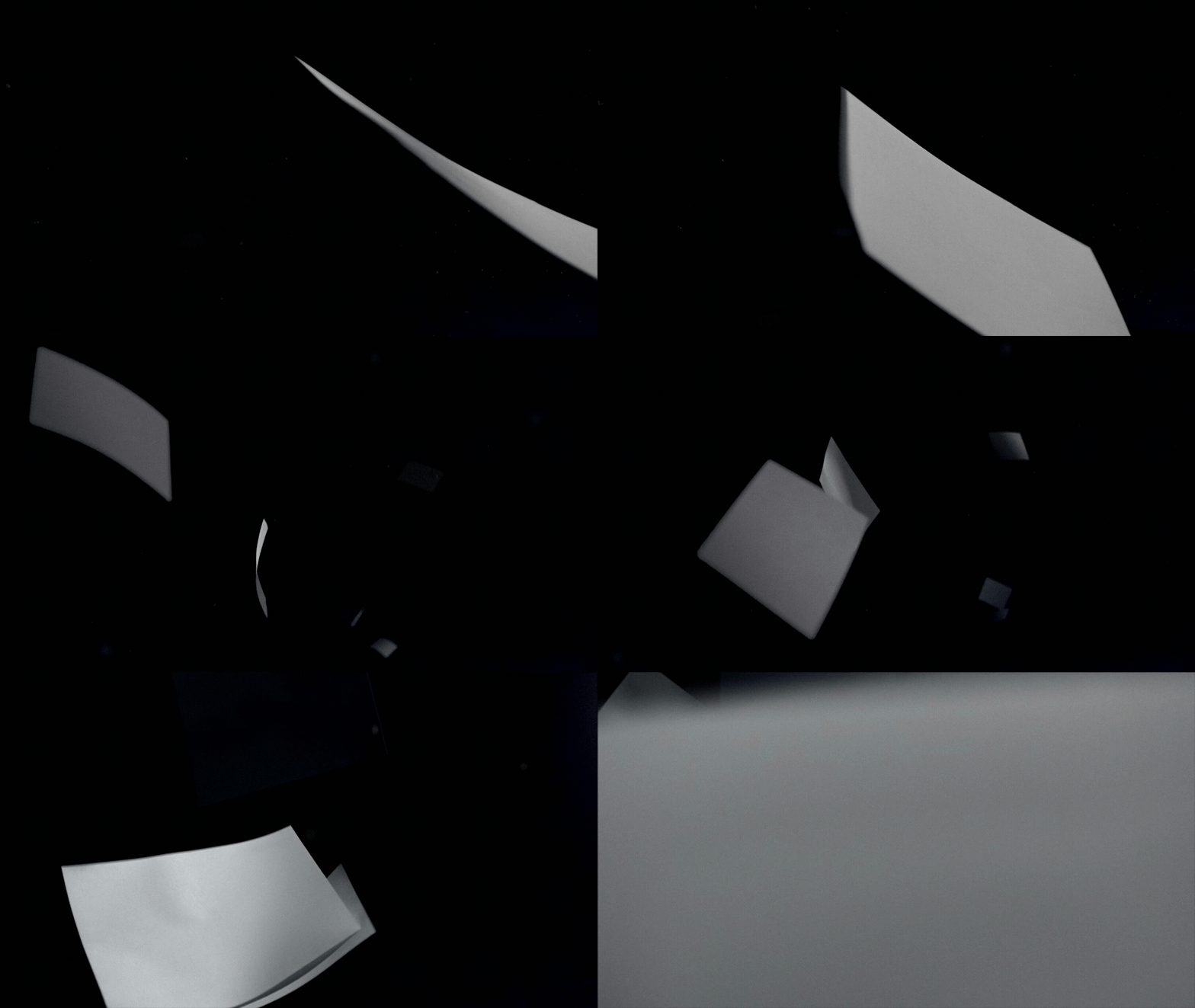
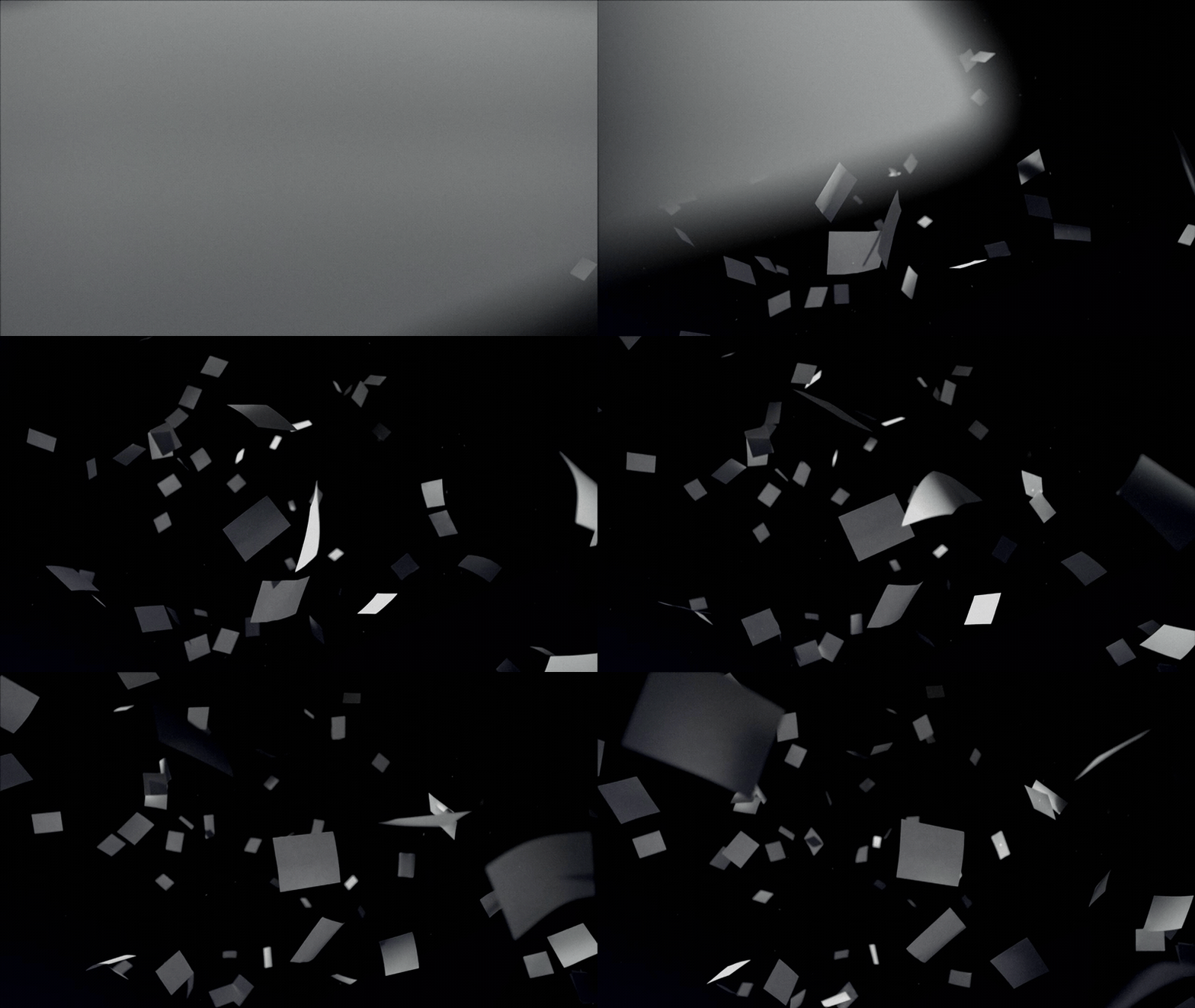
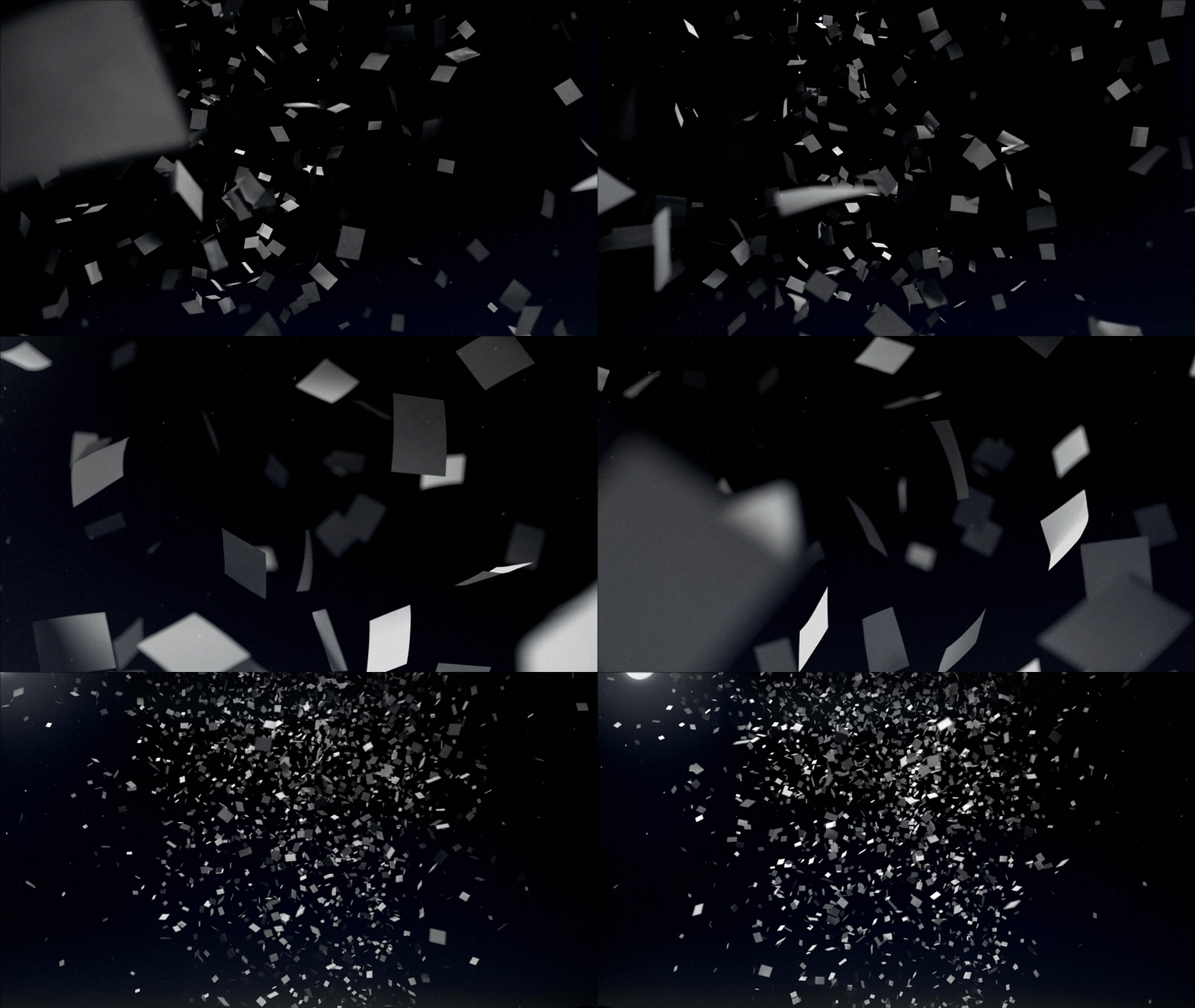
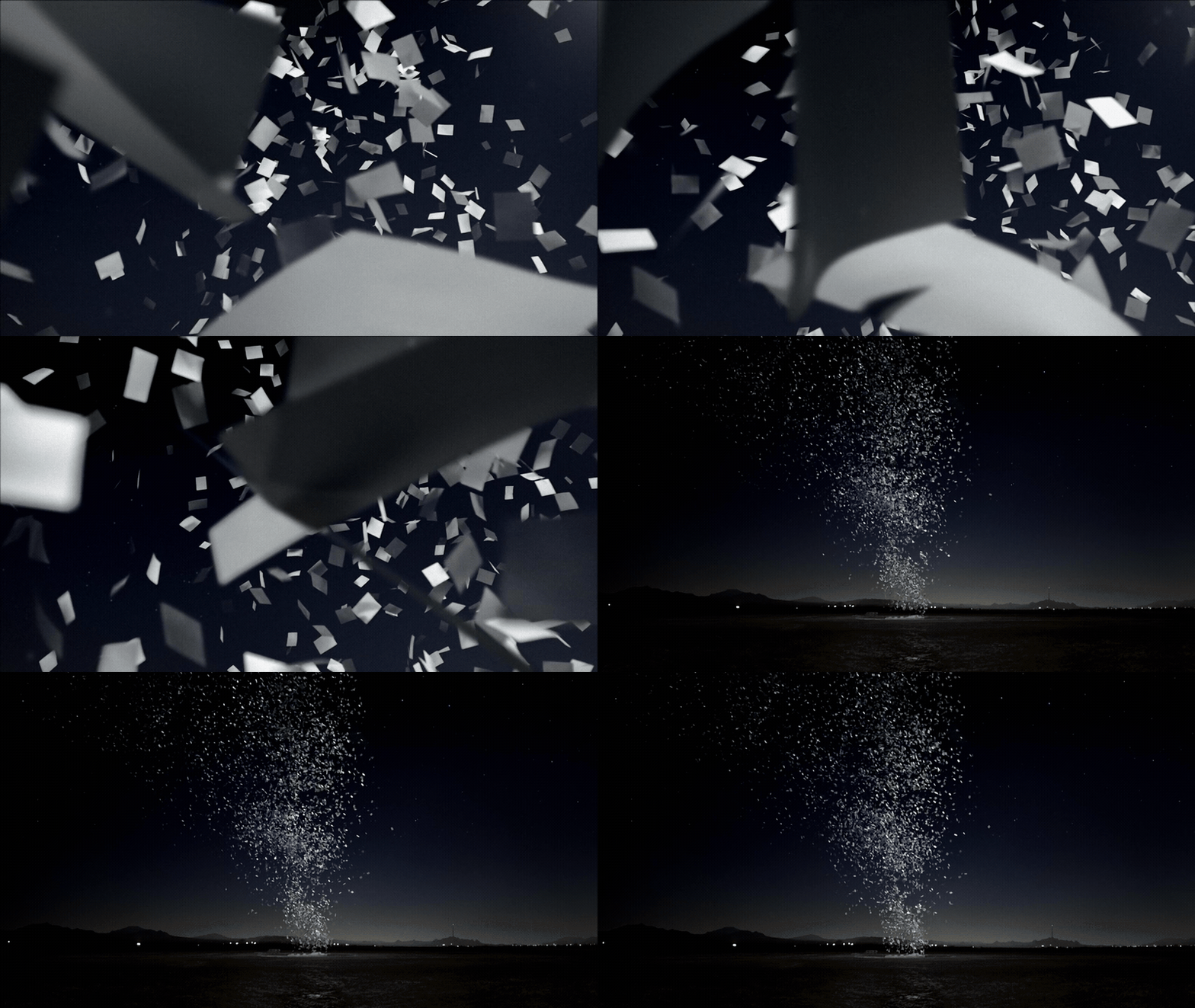
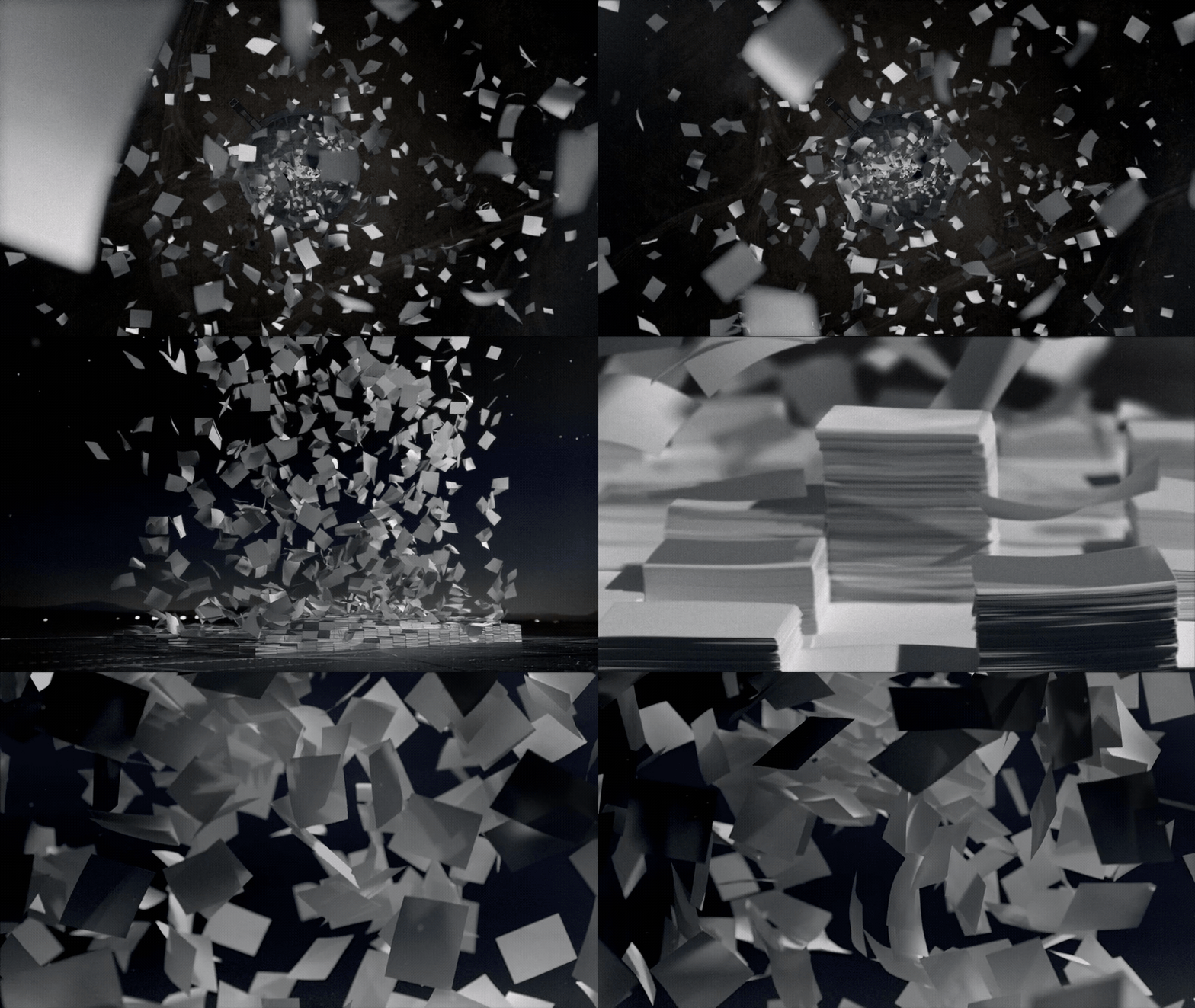
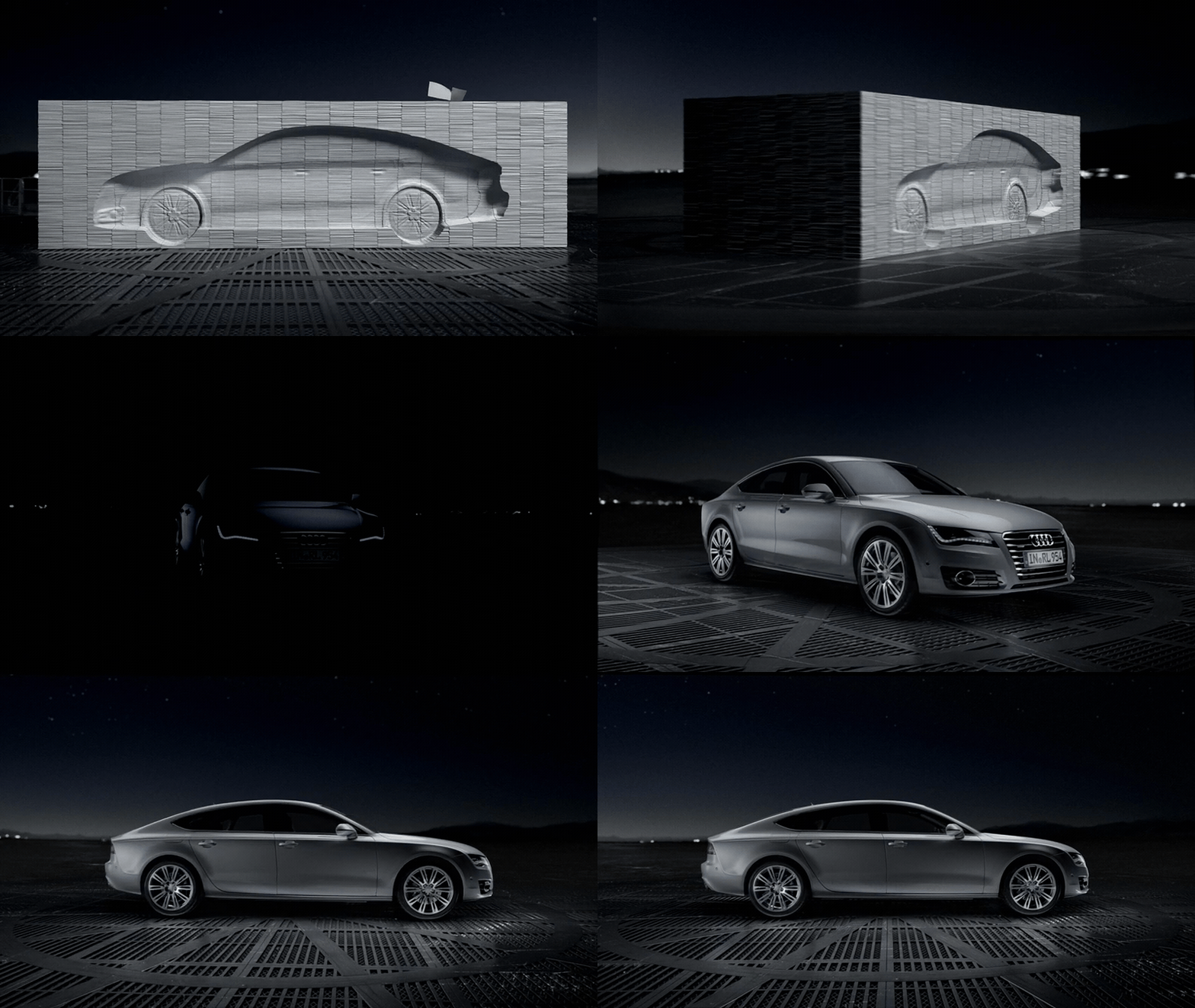
This is one of those jobs that pushes our technical tricks to the limit, from the shoot itself that required lots of time and effort to the actual paper carving and of course, paper landing in a natural way but directable and for this we used every single tool under the sky.
Director: Nicolai Fuglsig Agency: MJZ Production: BBH Client: Audi
And on the journey, I had the luck to work again with extremely talented people who managed their chunk in such a brilliant way that the whole project was a breeze.
Approach
Starting with a studio shoot we planned to build a rig for the camera and also a air sucking device so we could get in camera as much as possible and instead of doing a fully CG job just substitute the backgrounds with live action from a location shot… the result as spectacular when working at high speeds and highly poetic imagery although every time we needed to lift a lot of paper the air sucking device was limiting us a lot.
In that sense, my estimations of paper weight and air flow proved right. The machine was not powerful enough to lift the paper, but in mid-air, it managed well.
Therefore, we built a real-life 1/3 scale of the whole thing with real paper that was gorgeous to photograph, but we could not make the paper land where we wanted, nor could we lift the paper naturally, so we had to take over some of the work that was intended to be done in camera and extend the effect.
In this case, some of the close-ups were also done fully in CG due to the highly choreographed requests from the director and agency, so extensions and even full substitution, like this case, were the norm on some sections.
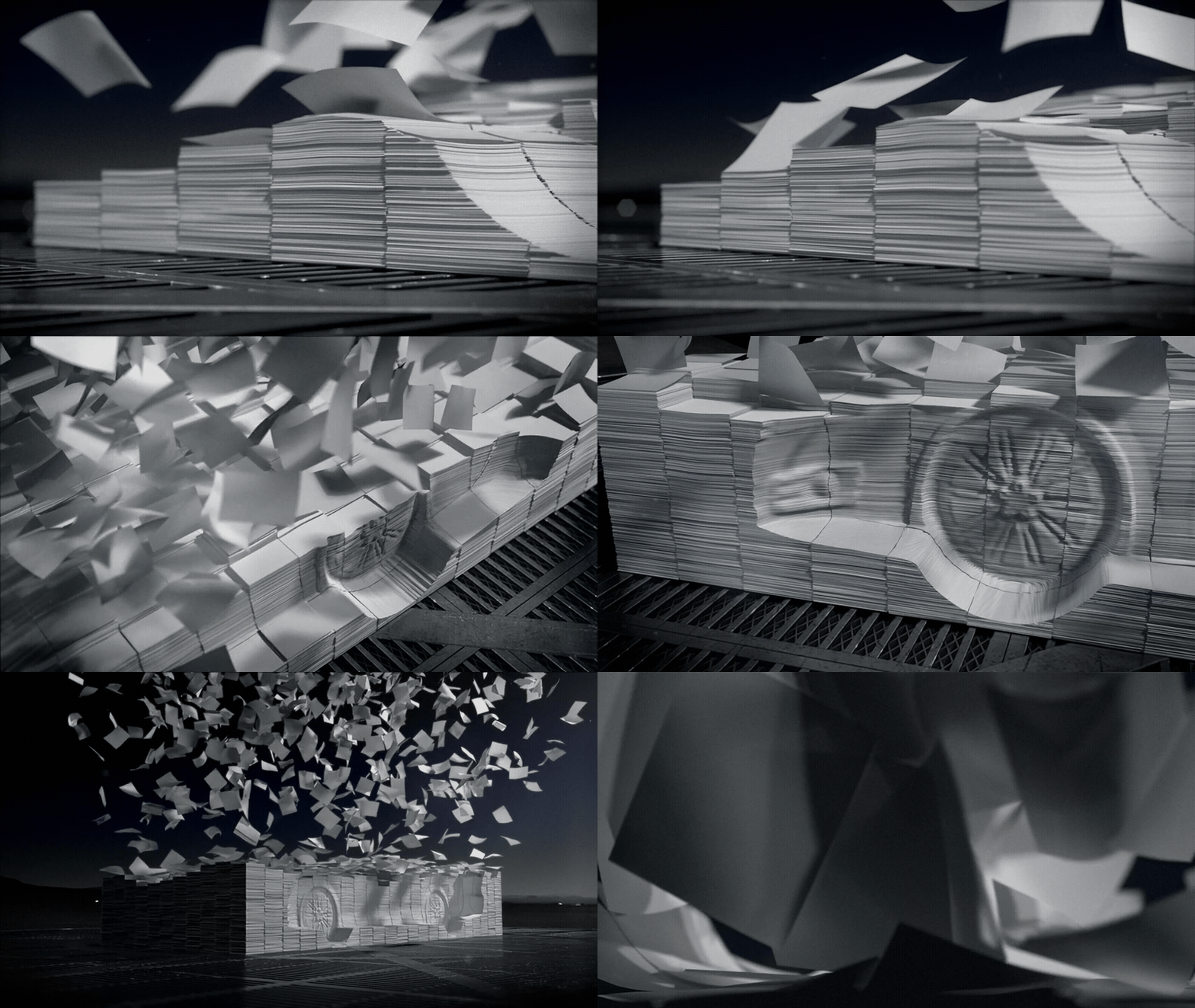
The carving process of the car proved a nightmare due to the size of the mesh to cut, for this the process I devised was to use 3DCoat to generate a voxel volume that was used to generate a second mesh that was closed (the positive), with manual tweaking of wholes (like the ones on the wheel archs) and elements that were sticking out as this was not possible to do physically.
The principle was that this should be possible to build, so after the whole cleaning operation, we processed a Boolean operation in Houdini to generate the negative of a set of rough boxes that defined where the paper was placed. Once the boolean was done for each frame, and this took around 6 hours for the resolution we were working with, we would go back to the positive to iron out the kinks and strange effects.
Then we created a shader in Houdini to generate the paper, taking into consideration paper tones, rotation, bendiness, offset of paper as we observed from the shoot's real-life elements. This took a lot of time, but was critical, of course.
To make the paper land we exported the top of the boxes to Maya where were we simulated the paper in reverse and after approval take them back to Houdini to assemble the scene and we created a very complex function to identify the paper that was about to land and we deleted it because we realised this was not a beautiful element, the director and us really wanted a constant flow rather than a real event of landing.
The render times were not bad at all, but processing the files to be sent to the farm was a very slow process due to the scale… in the end, we were so happy with the results that we managed to celebrate at the pub like there was no end.
The link has been copied!
Your link has expired. Please request a new one.
Your link has expired. Please request a new one.
Your link has expired. Please request a new one.
Great! You've successfully signed up.
Great! You've successfully signed up.
Welcome back! You've successfully signed in.
Success! You now have access to additional content.