Carlsberg 'The Ride'
I can safely say I have been waiting years for a job like this to appear in the radar, needless to say when we were awarded the job, we were literally over the moon.
I can safely say I have been waiting years for a job like this to appear in the radar, needless to say when we were awarded the job, we were literally over the moon.
Director: Juan Cabral
Agency: Santos
Production: MJZ London
Production Services: Bonkers Amsterdam
Client: Carlsberg
The main approach was radically different from any other post facility, as we did really mean to shoot the roller coaster action in the roller coaster, not in a studio, plus devised a novel method to deal with high-speed, high-vibration material (and then GoPro material) that we felt was instrumental to make it happen in this manner.
We analysed the job in detail for more than a week right before the job was even at awarding stage and identified all the possible shots we would encounter, from the simplest to the most extreme and broke down the method for all of them except two that were identified as pretty much impossible to do, these were shots inside the carriage looking to the crowd at high speed and with cameras that have rolling shutter issues. One interior looking back, and another almost-interior looking back.
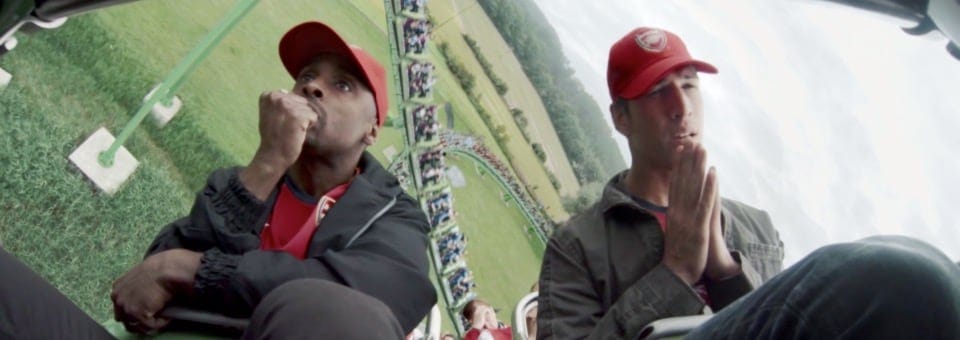
We did search the internet to see the kind of content those shots would provide and was so extreme that not even the worst possible scenario I did encounter through my career match the challenge but… instead of accepting the fact we got in touch with one of the best camera tracking artists in the world and discussed it, he brought one possible solution that was far from perfect but opened the door to say, yes to the client “it will be hard but certainly if we shot it this way it is possible”.
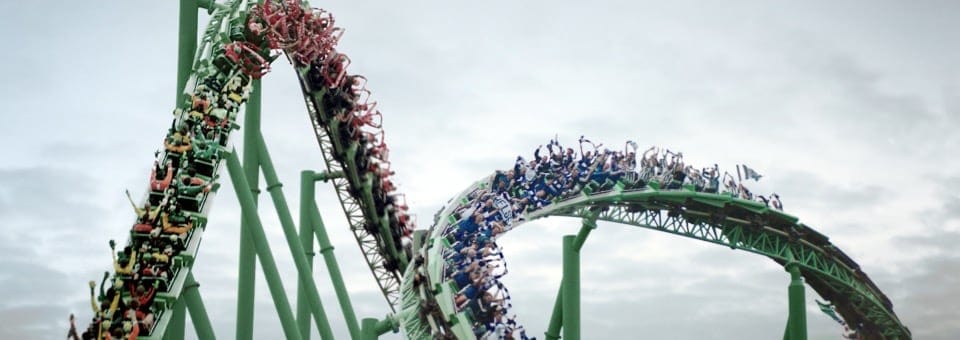
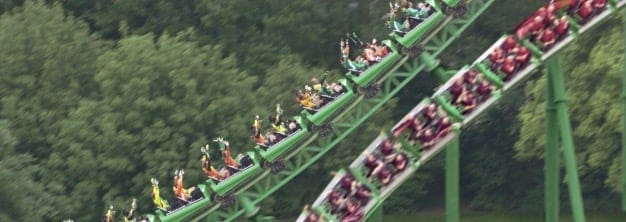
So we got the job awarded, and I flew to the roller coaster in the Netherlands, called Goliath, it is a true spectacle of 64 meters high and speeds of 100km/hr with fast turns, massive vibrations and the weather promised surprises.
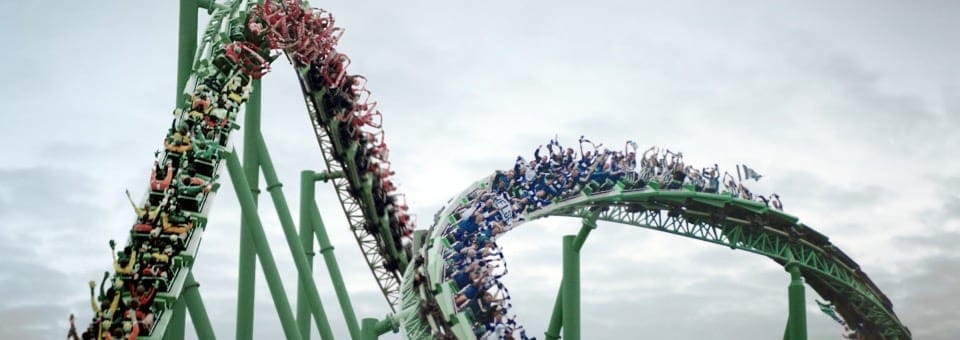
We discussed again the colour of the ride, which was painted an ugly magenta and had to be changed. Furthermore the two available trains where different, on one of them was perfect green, the other was magenta so we decided to dress the magenta one with the same green than the other train to eliminate any post work on the carriages themselves which would involve so much work that would jeopardise the job, and i must thank the production company MJZ and in particular Steven and Nicci to help us there because I truly believe that made a huge huge difference.
Pre-shoot
Back in England and with a few videos at hand of the experience I reanalysed the ride section by section and found the areas that if used meant we were in the “shot from hell” situation, and there were plenty of these, too many to think it was not going to happen so we redouble our efforts to find a better way to analyse the tack and started moving the CAD data requests for the roller coaster which would solve all the issues better.
This is one of the first tests as a proof of concept of the actual stitching technique we were proposing.
The job was moving forward, and many meetings later, cancelling my holidays and lots of preparation, we were both Ally (flame) and I (3d) on an extremely short 2-day shoot with unpredictable weather, gathering insane amounts of photos, measurements and data so we could later cover any eventuality.
I started modelling the character, rigged it all in Houdini to a much higher level than required as I could see we will have to pick extra shots that may require much higher resolution so we aimed for a very close mid shot of the actor as our maximum distance, which meant textures of 5k for the face for example, in parallel the team worked on the Carlsberg concept work the carriages, the rig for the roller coaster and the rig for the train itself. I also animated 5 different animation cycles of the guys, hoping that was enough.
Shoot
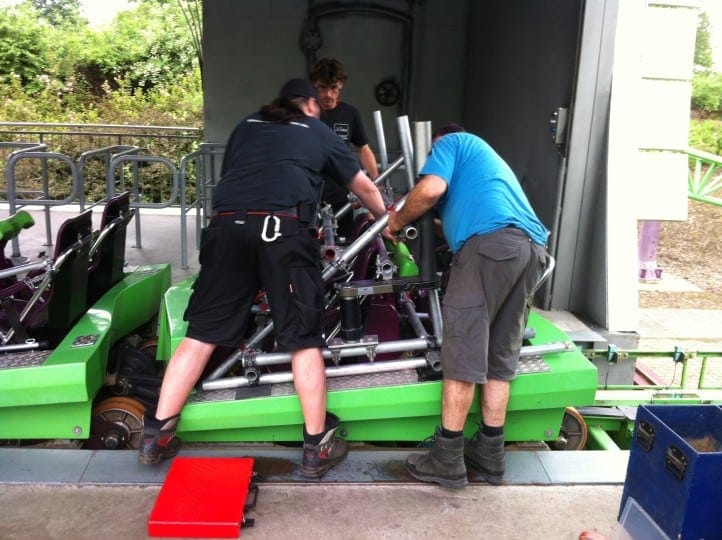
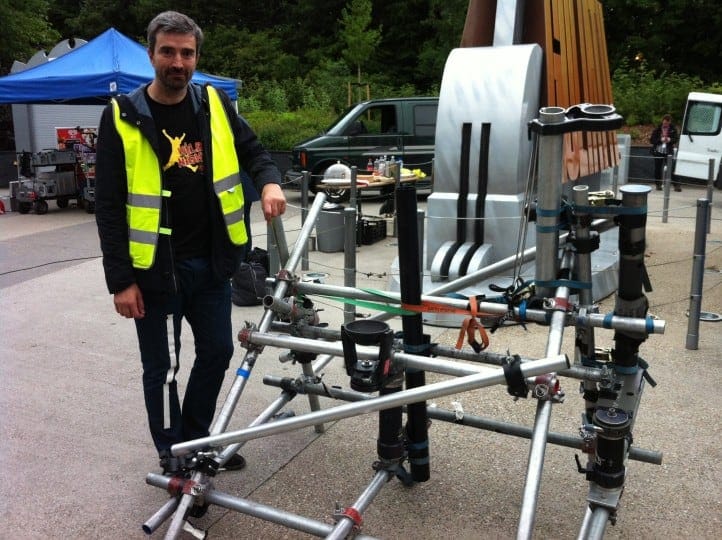
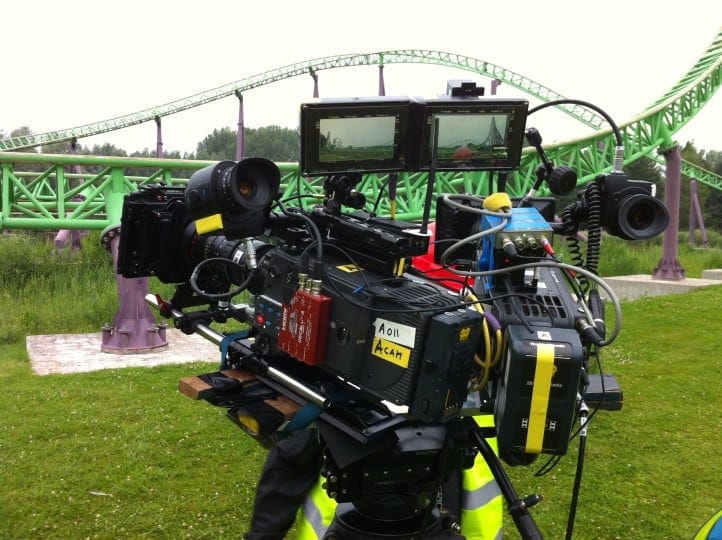
We had a preparation day that we used to test the rigs that were mounted on the carriages, rigs that were designed to hold 2 Alexa cameras and 1 Red Epic camera, shooting at 120fps and 300fps respectively, which was to be tested without people, of course, as one mistake could actually kill people. But the rig team was outstanding, literally on top of the league, and their work was insanely perfect, so we got all the tests done and more.
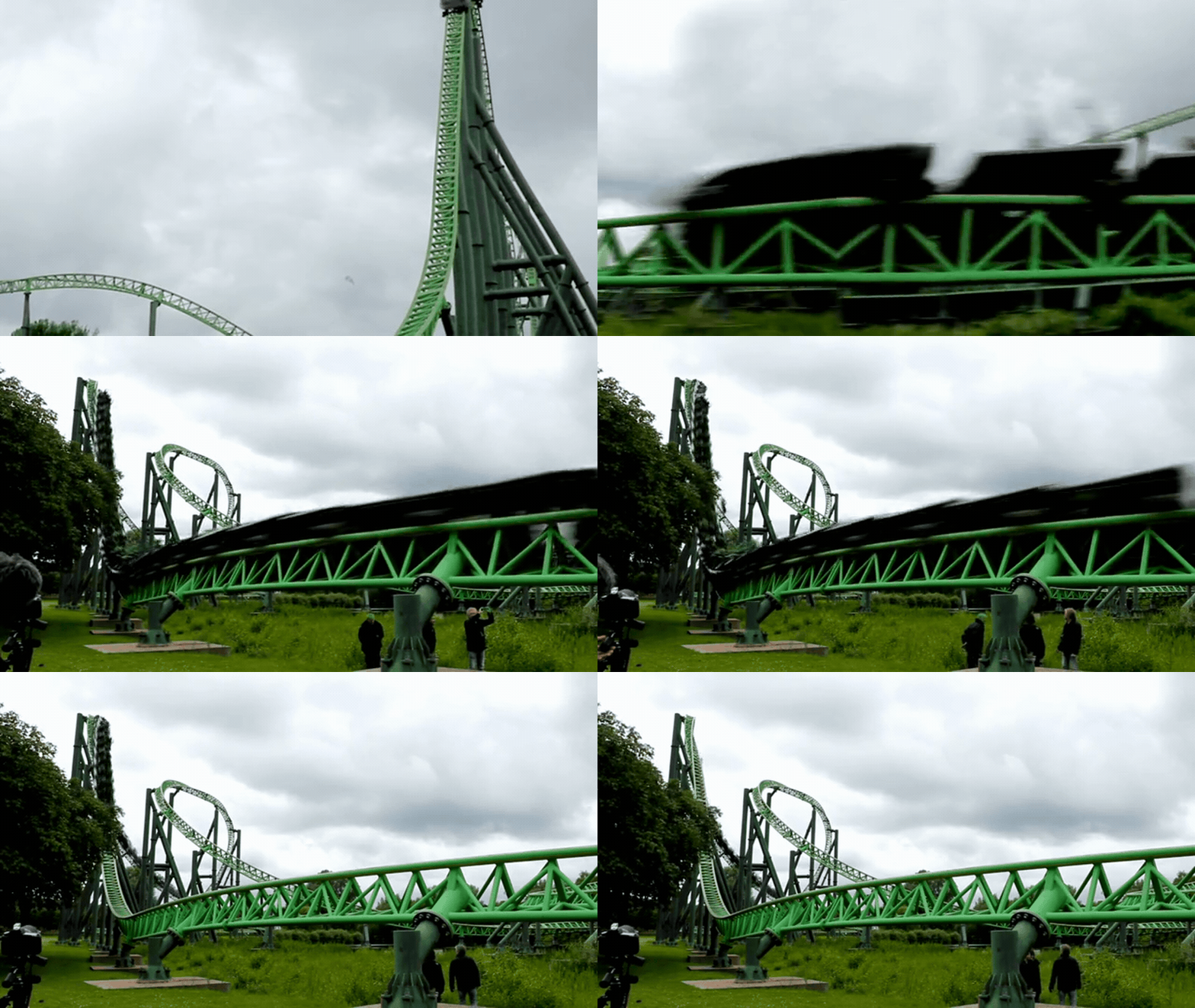
At that point talking with Ally about the critically complex shots and discussing the possibilities assuming he had an idea that was the trigger to the breakthrough, and it was based on the assumption that the track never moves and the train always goes at the same speed (approx.), and together we devised that if we managed to track the camera once for the whole roller coaster we never had to track again, just rotate the camera, line up and match the speed given certain shots were at 120fps and others at 50fps…
So at this point I managed to squeeze a test last minute that was the golden track, and we did put an Alexa camera shooting at 120fps looking forward and down, thew tons of markeds, ping pong balls, tennis balls, yellow vests and what not on the surrounding track and recorded that take… 18000 frames later we have the perfect footage for our tracking expert, Simon Payne.
The schedule was tough, wake up at 4 pm go start shooting at 5 am until 10 am, then the roller coaster was used as usual and when the park closed at 5 pm we started again until 10 pm when the light was off, these three days (test + 2 shooting days) felt like a week and we were destroyed but super happy as the material already looked fantastic.
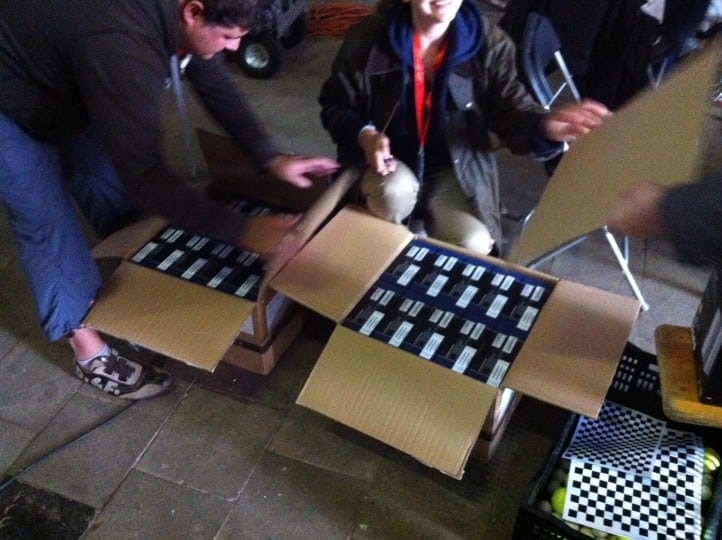
We proceed to ship tons of data to London instead of having a nap and manage to get the team working on the modelling with paper measurements, on the tracking, on the people, textures, etc. Here you can see the amount of Hard Drives necessary to take all the material back home… insane…
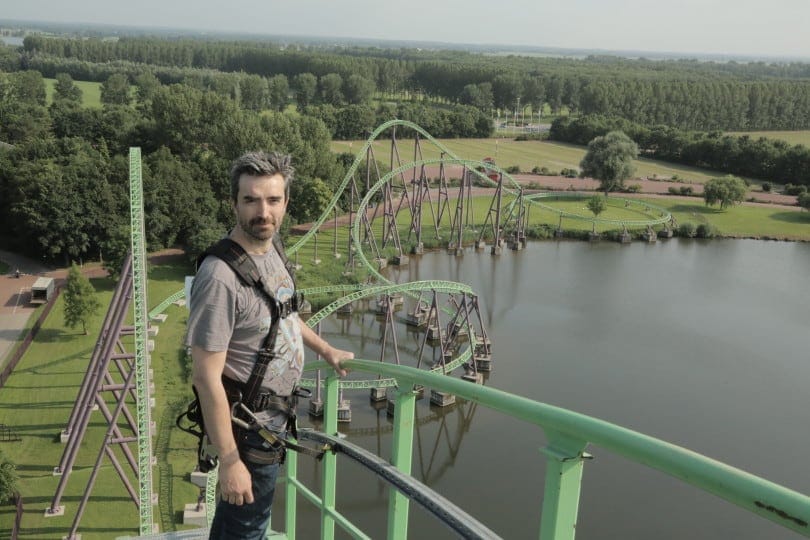
By the second day, it was clear I needed extra reference frames for our master tracking, so I had to walk up the attraction maintenance stairs to take those special photos, and horrifying as it was proved once again critical… by the way, the whole structure wobbles with every step and the wind… not fun, believe me.
After all our shots and some extra clean passes while testing rigs, we managed to get extra reference takes too that could help us validate our master track was good and we devised that if we could track it properly, even without the help of the CAD data, the start and the end will close, which would be the signal that we got it right… But… unfortunately, even after 10 days of an incredibly challenging track, we were still having problems dealing with such a volume of frames, and both Boujou and PFTrack struggled like crazy… to the point of constant crashing… incredibly long solves, and we had to review our method.
The main 2D technique used was static cameras and multiple passes that we would assemble together, so we required an army of roto artists to help us. We relied on outsourcing these to one of the best companies in the world to handle the delicate task, plus the volume required… not an easy feat.
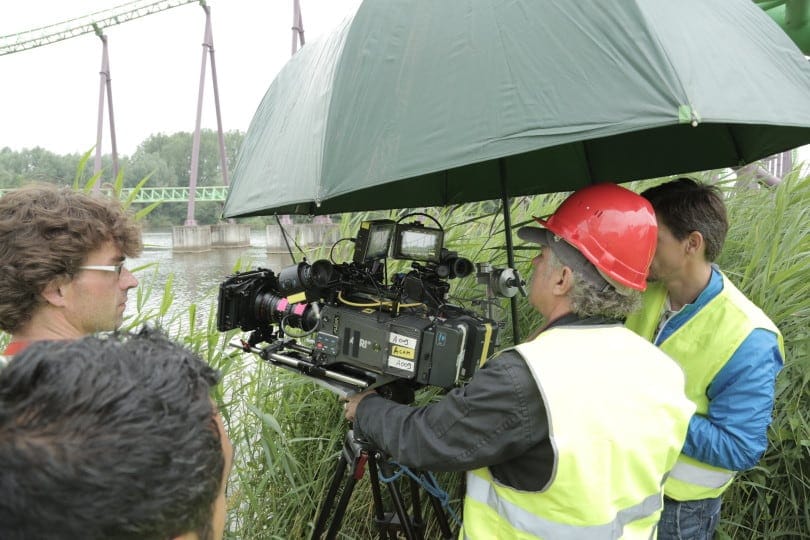
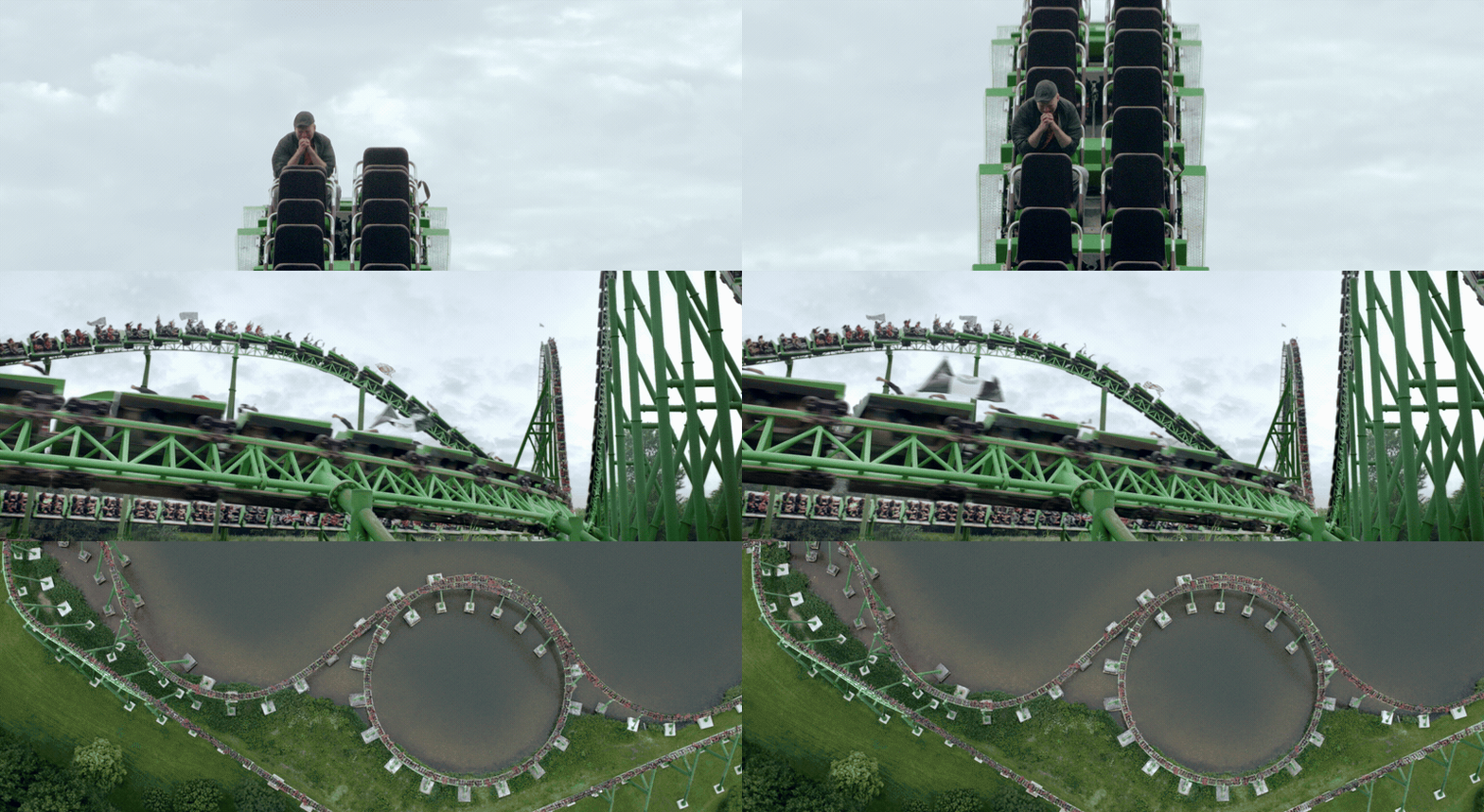
For the big 2D shots, we used a stitching technique shooting with 2 Alexa on a special rig so we could cover a huge panoramic range, which we will later “travel” through. This required some careful image undistortion process and later a nice seam, but proved a non-issue. For the Alexa shots inside the carriages, we truly didn’t have any problem. Given the master track approach and the fact that the camera rigs were so good, we didn’t get any vibrations, almost so all in all the job plan worked 100%.
By the time the editing started, we could already see that certain areas of the coaster were used much more than the others, so we made the decision to track just that section (5000 frames) while waiting for the CAD data. This proved very successful, as in just 2 days, we had it.

The thinking was to be able to validate the tracking by using the line described and compare it against the footage when the track crosses over itself, as we couldn’t simply 5000 frames and expect it to work out of the box, so we broke down the key sections we needed and made sure we had the validation in each section.
The sign
In London, we continued our work on the carriage with texturing and shading these, also set up our master scene and passes and started to produce the Carlsberg sign in a procedural way using Houdini (our only 3D package) to make sure the Director had the freedom to change anything at any time.
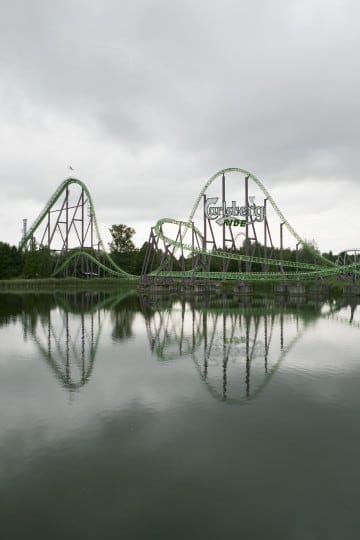
Also, we did carry on working on the rig for the track, which from the start was planned to be a simple curve-based construction with a secondary curve constrained to it, so the layout stage was extraordinarily simple and efficient.
Characters
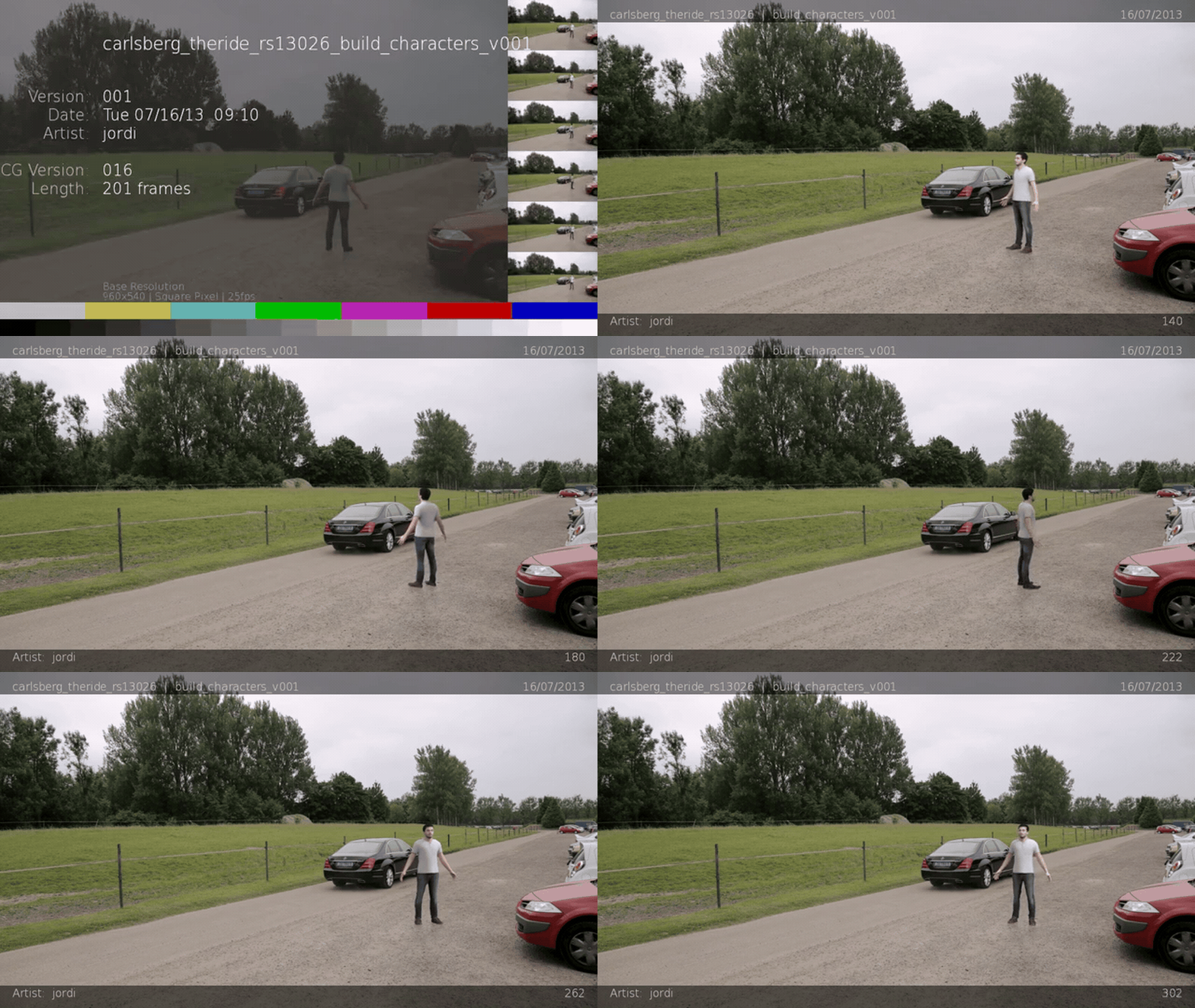
With the characters, we clearly found ourselves working harder than expected. They were good, but the animation needed to be better, so I started using iPiSoft motion capture tracking using a Kinect we had at hand, and our producer, Paul, was my actor. We produced 5 different clips of 2000 frames each that looked great and substituted the animation with his mocap data. Also, we added flags which were clearly critical and scarves too… it started to come together clearly.
Compositing
We also assemble a team of flame and two 3D artists (myself on of these) to assist the edit as on these kind of jobs the edit can derail any job… basically shooting something empty will surely be difficult to edit and approve so we setup a ninja team where we would receive shots from the editor, track them, put the layout and basic animation, all lit and textured simply and return the clip with the effect… not perfect tracking.. sure, but incredibly efficient for the editor.
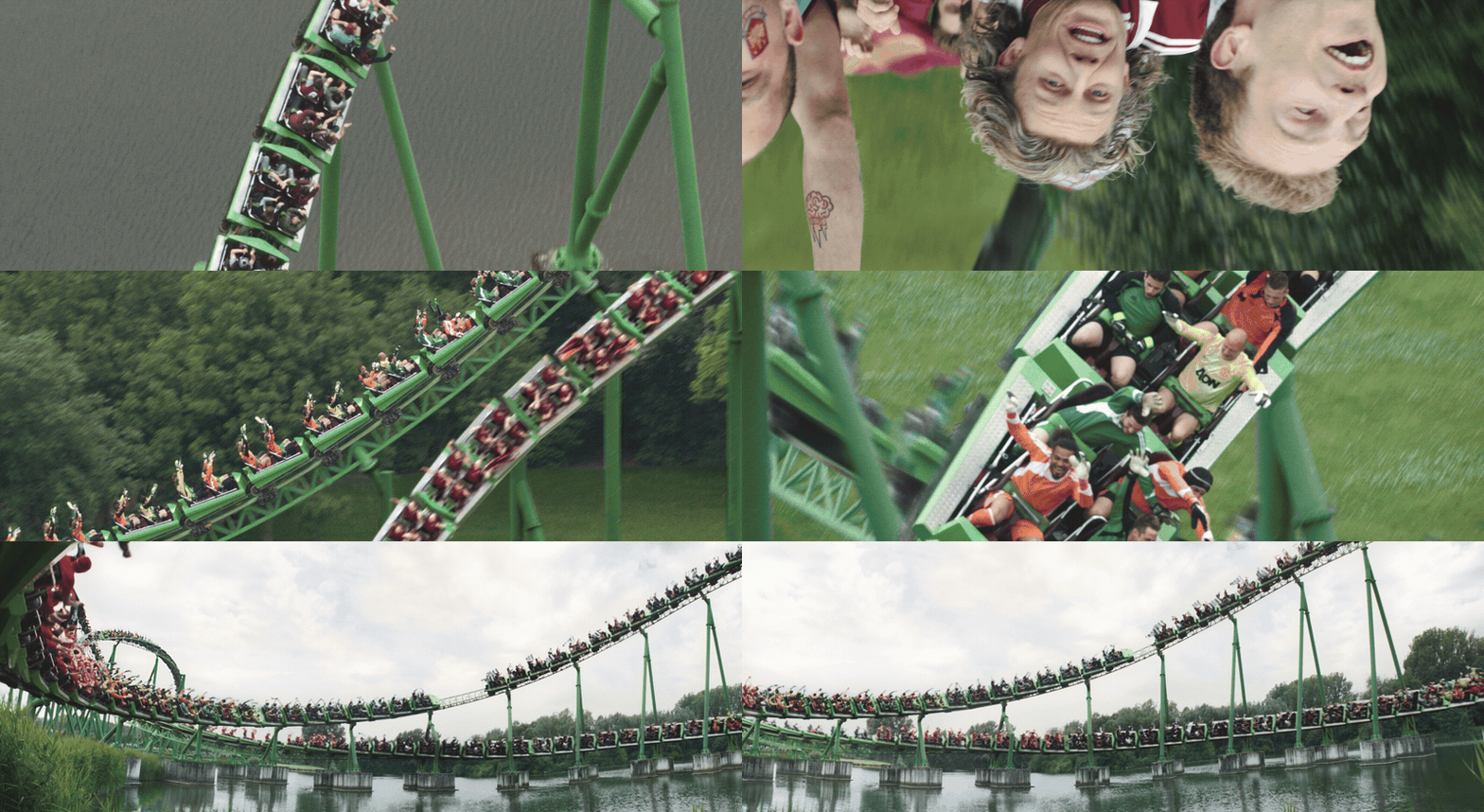
This was invaluable as we managed to assemble tons of shots, many left in the cutting room, even inventing a shot so they could gauge the edit properly. The success was resounding as once the edit was done, it was approved in one single pass, no more tweaks, no more changes… it was simply perfect for our schedule, as we already were a bit delayed due to the huge amount of data ingested and the complex setup required, plus the editing taking a bit longer than expected.
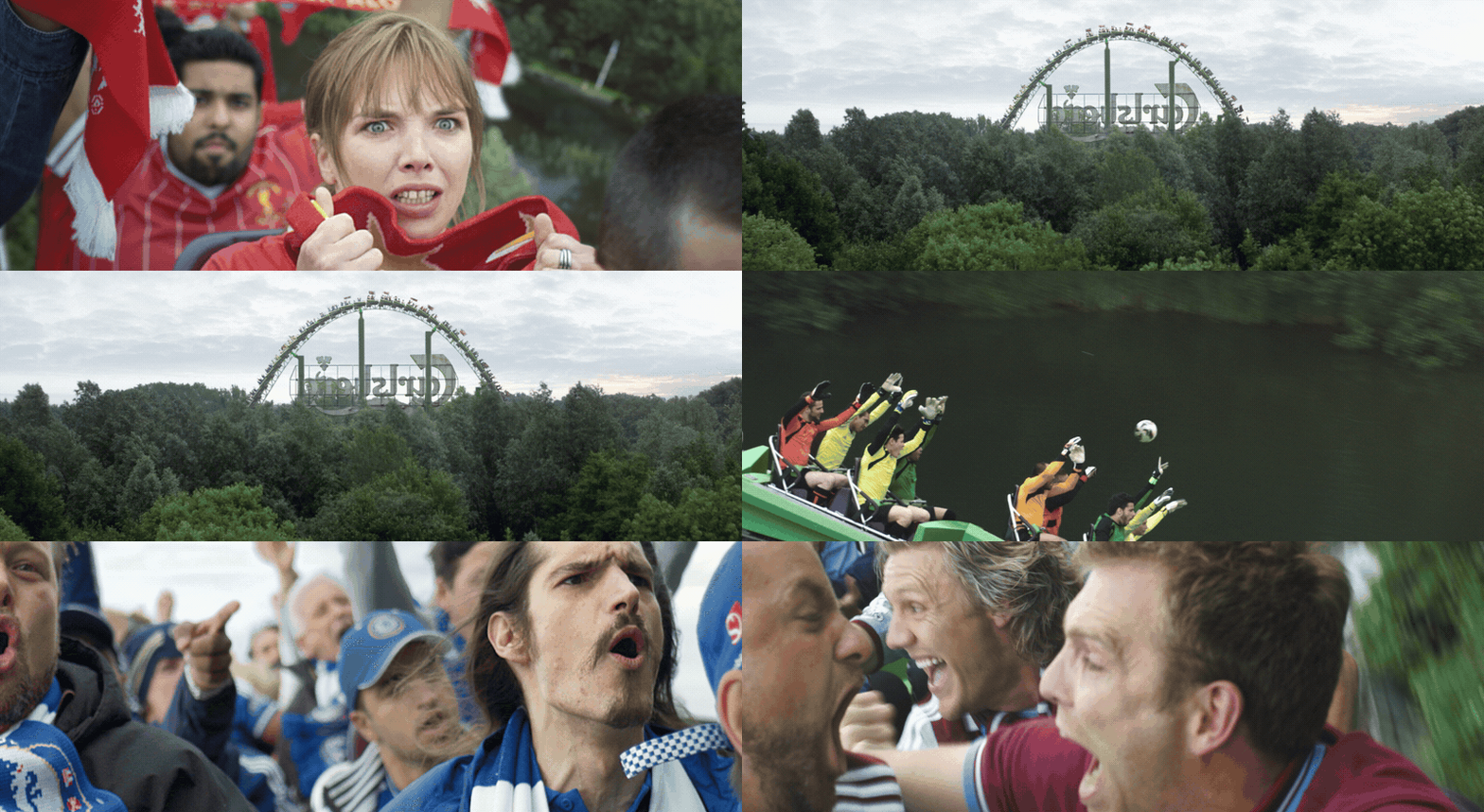
So the edit arrived with tons of data for the job (i recall close to 5Tb of content that was always available only as we didn’t have time… we just need it all ready at all times) And we were starting to put together the directory structure… we went from our initial assumption of 6-8 shots before the shoot to something like 4-6 shots and then when the edit arrive we found ourselves with 18 shots!!!! The edit was incredible. How could I say no to that, given we cracked the tracking problem? So we pressed ahead, and with the team inspired, we put together a layout in record time, tracked tons of shots really fast in a first pass approach and started to render.
It was clear we had major problems with a few shots that were GoPro shots, tons of jelly-like distortions, impossible to track by hand, so the approach was to track using the reversed camera and match the jelly shot as much as possible, then distort our CG to the jelly shot. Of course, that was too brutal, so we minimised the jelly effect using Nuke tools, which gave us the perfect ground for very energetic shots and at the same time, visually acceptable at a professional level.
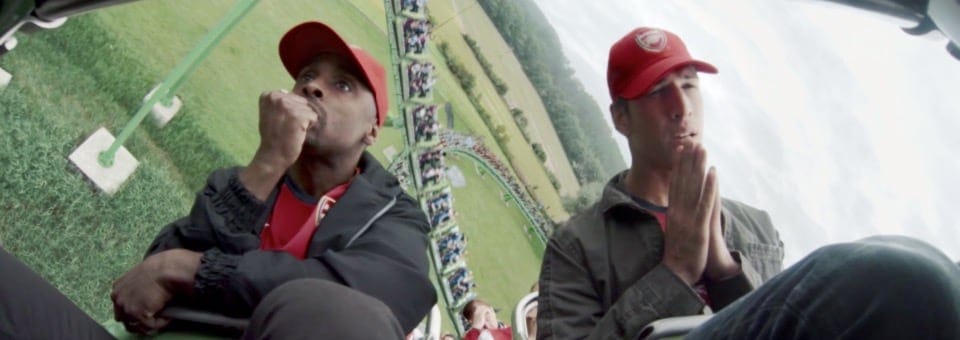
At the same time the compositing team lead by Ally were going through all the material including major sky replacement of 58 shots as the clouds in Netherlands were truly dull, the Director’s request was simple yet proved hard to find interesting cloud that matched the previous weather conditions and were not too happy, a fine line that proved tough to crack but after many iterations we managed to balance them all.
Also, dealing with so many different types of footage from so different cameras was a headache as Alexa, Red and GoPro respond so differently that it was a middle-of-the-road strategy that made it possible.
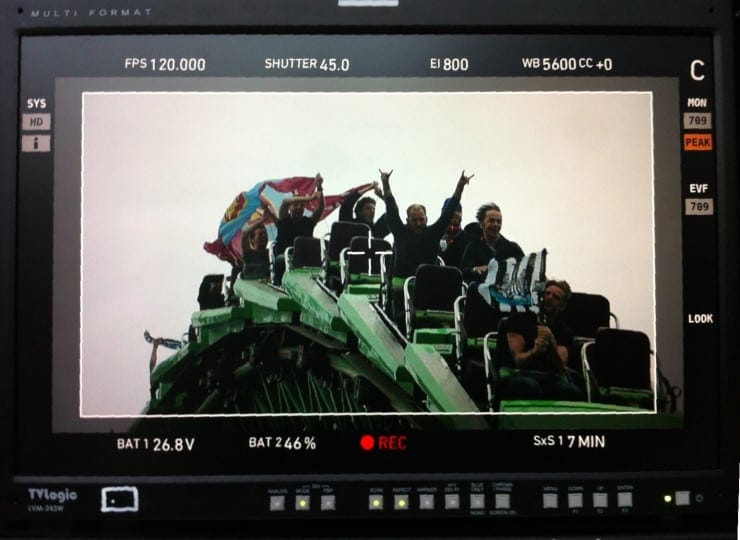
During the job, the intensity we put in at first was fantastic as we managed to go ahead of schedule and did in 1 week what was meant to be done in 3 weeks, thanks to everybody pushing hard. By mid-project, we were really in the zone and ended up delivering the 3D ahead of schedule by 1 whole week on a schedule of 4 weeks.
Needless to say instead of relaxing we reviewed the lighting and animation on every single shot, to the point that reinvested that week in truly finessing the 3D as much as possible and on the way hopefully deliver an amazing experience for the director seeing us that we were not abandoning the job, but truly committed… and I did loved every minute, specially every time I threw a new challenge to the team and they responded quick and found the results of the tweak were so noticeable.
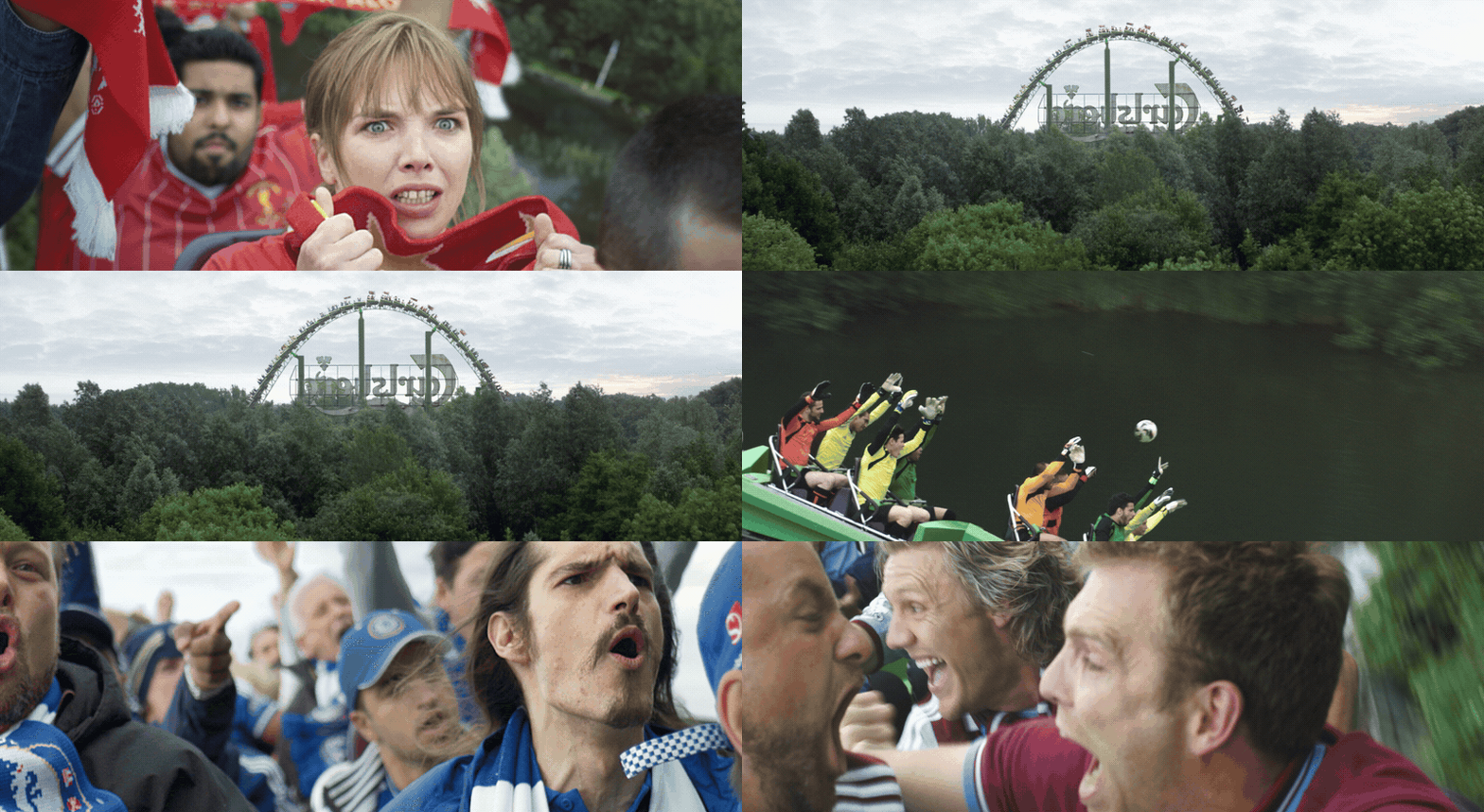
Meanwhile, the whole nuke team were assembling the complex 3D carriage extension shots and crafting lots of other elements for our Flame team, where Ally was the lead and had the fortune to work with another world-class Flame artist, Ant Walsham.
During the process, the Director came every day, and we coordinated constant reviews of 3D, 2D, design issues and more, so we could manage the 58 shots we were working on efficiently and make decisions when any questions arose, therefore being very fast.
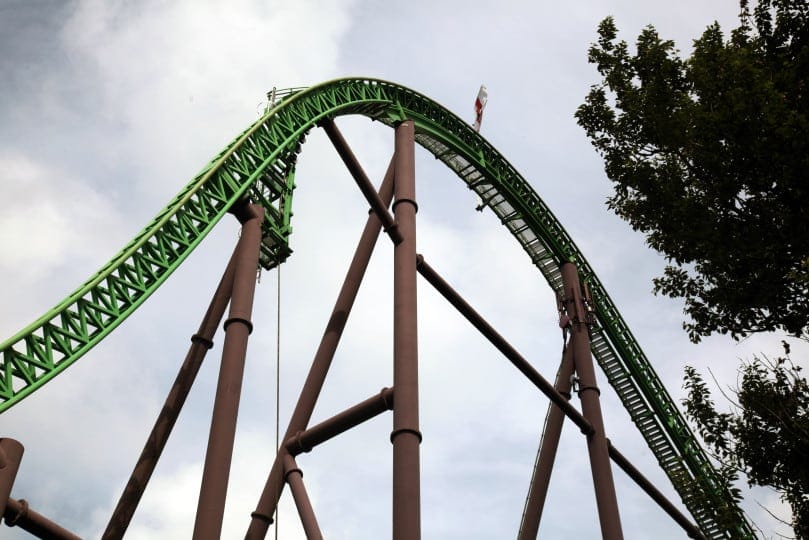
Also we were trying to explore new ideas given we were in good shape, in the form of more people in the carriages for a shot, different size flags, specially designed sign for the first shot to counterbalance the skewing that happened due to the dramatic perspective, different light bulk methods, different approaches with the 3D ball and how it bounced arriving to the conclusion that we needed the goalkeeper to use his fist, etc…
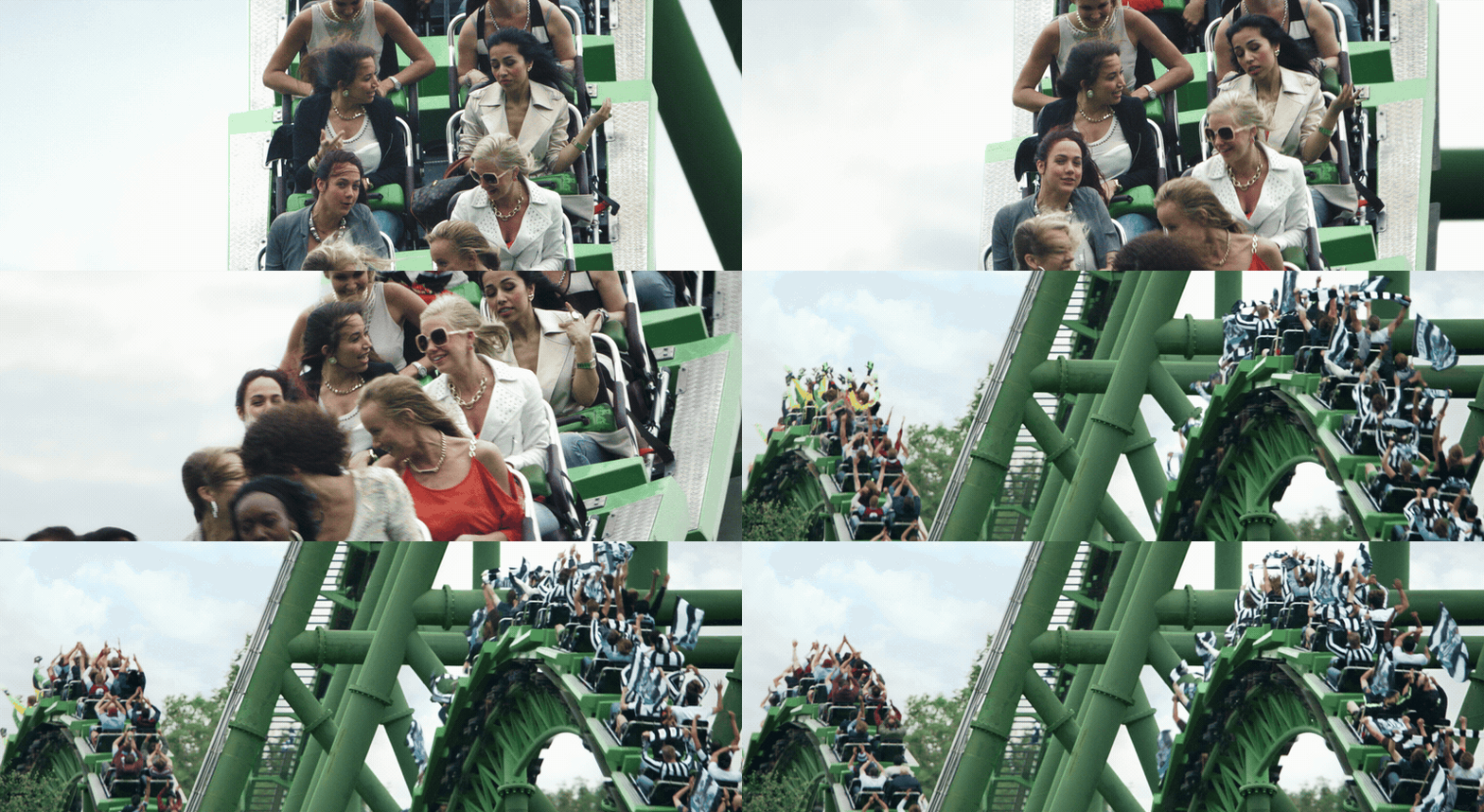
The last few days we ended up revisiting our 3D, finding the weakest points and further refining these, like adding better texturing details for the opening, re-rendering with much higher filtering to minimise the grain that was appearing, tweaking the size of flags, etc…
All in all, an amazing experience that I believe proves we are playing in the top category and bringing something unique to the party.
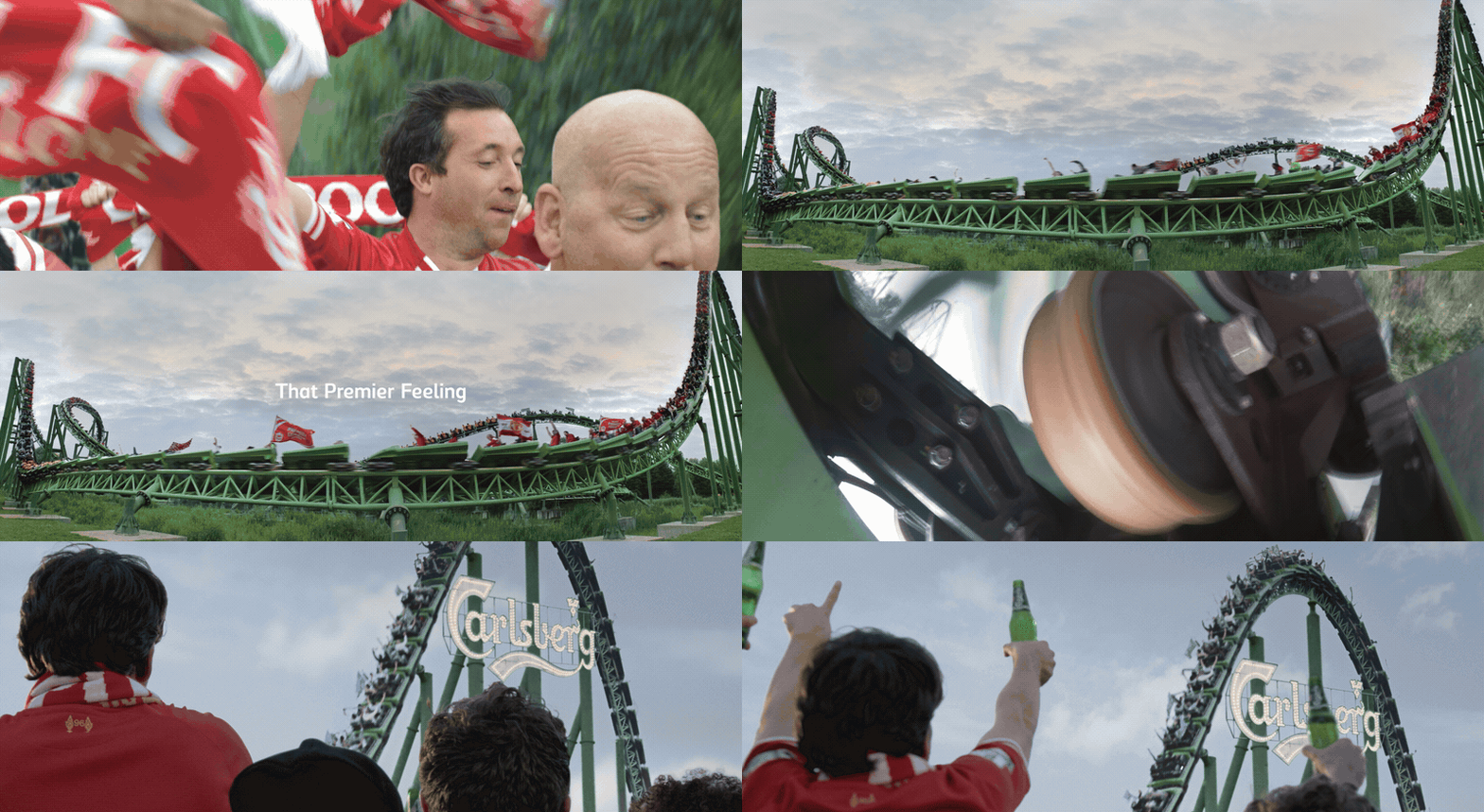
Conclusion
A once-in-a-lifetime experience that I will cherish all my life, that is for sure.