When UEFA and Design.Studio (now Further) asked us to reimagine the Champions League broadcast identity. The brief was clear in its ambition and genuinely open in its creative latitude. Broadcasters needed a complete visual toolkit — graphics, sequences, hero assets — that could carry the weight of the world's most-watched club football competition, week in, week out, for years.
Starball
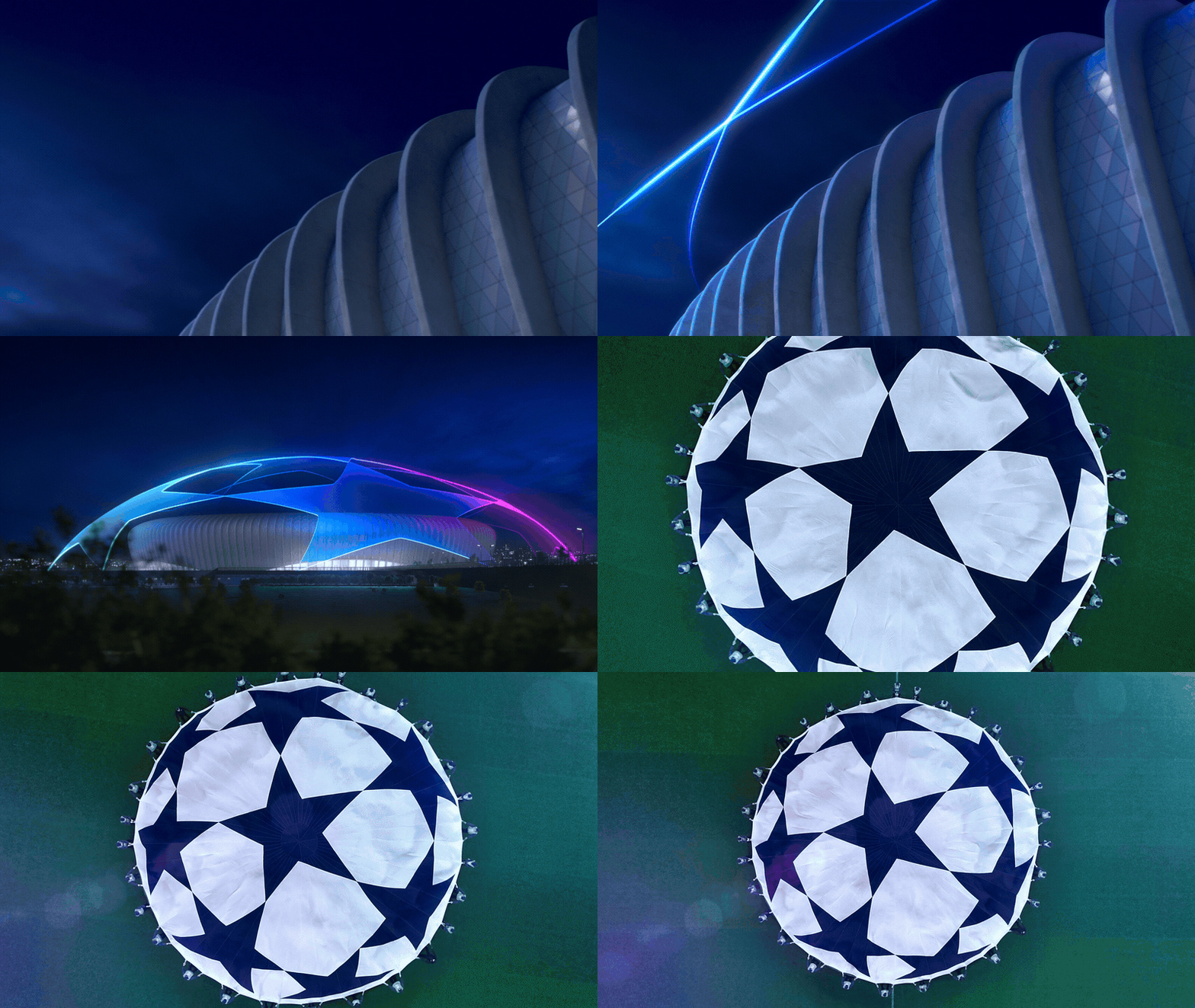
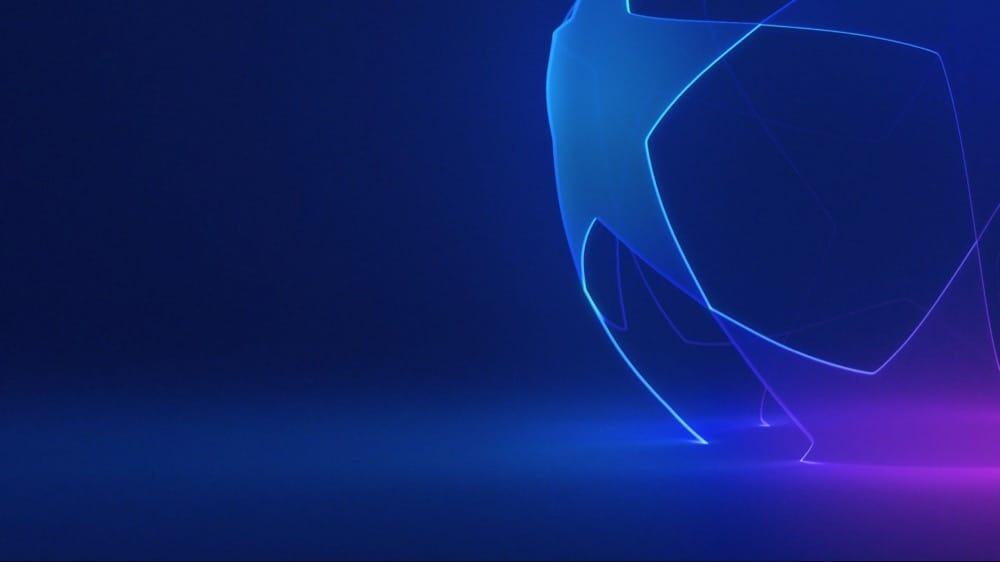
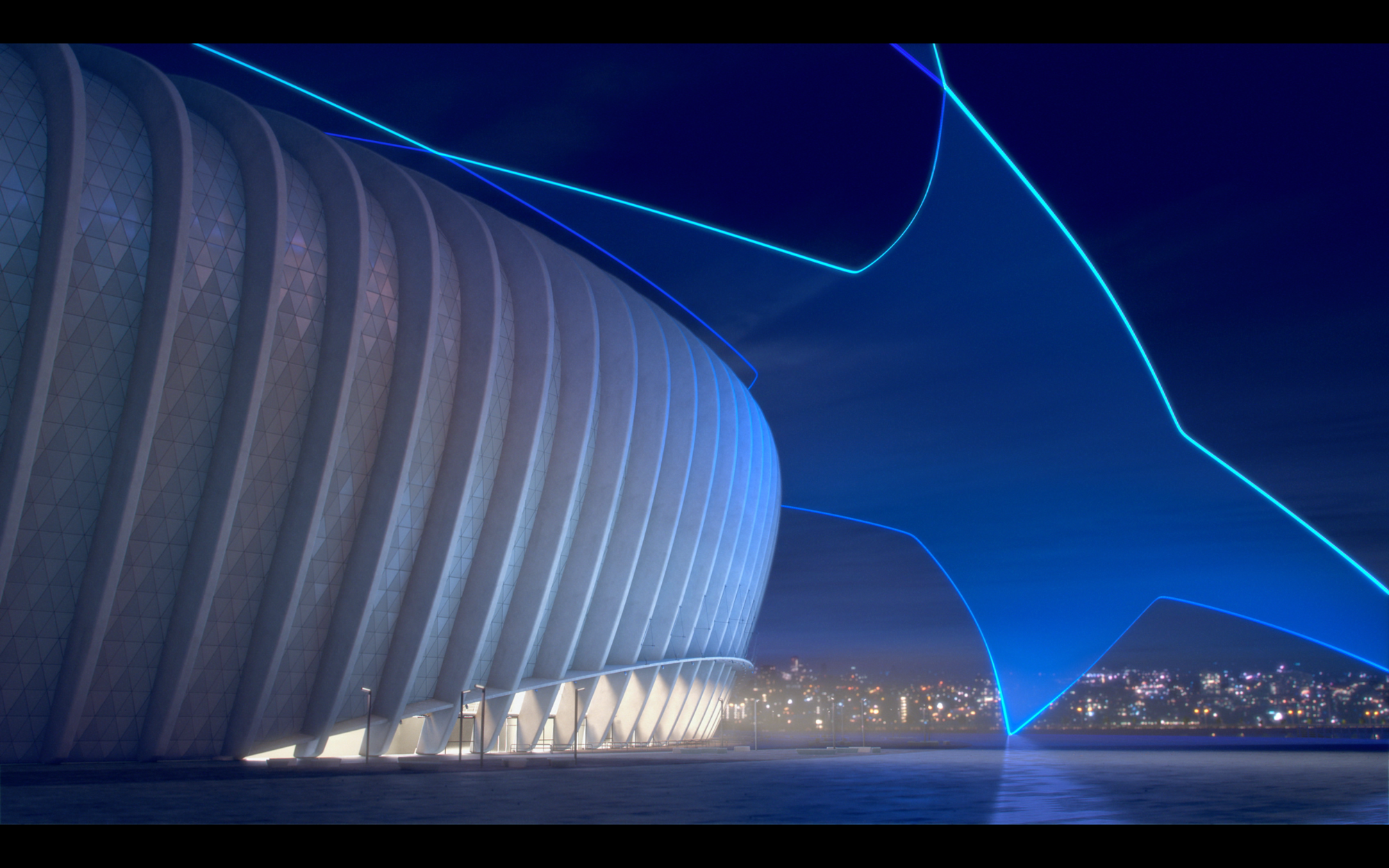
The centrepiece was the starball. Rather than treating it as decoration, we thought of it as a storytelling device: something that could hold and reflect the moments that make the Champions League feel like the ultimate stage.
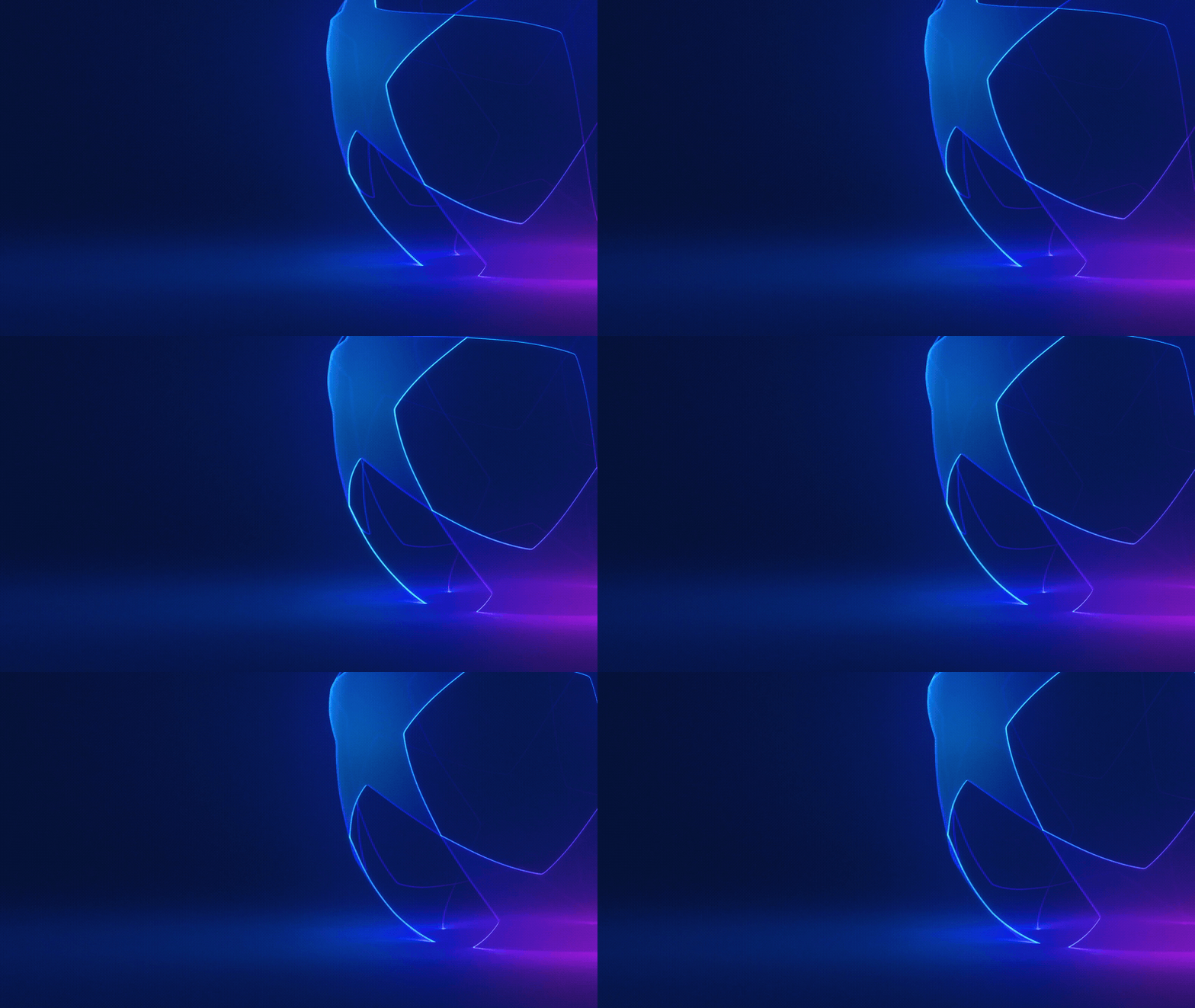
The graphic design team developed the look closely with the Design.Studio creative director to bring an ethereal, glass-like structure but made out of light, in doing so, the sophisticated look would last the test of time and serve the brand for years to come.
We delivered it at 30K resolution, which gave us the flexibility to use it in surprisingly varied ways — wrapping dynamically around players like Ronaldo, Dzeko and Mandzukić in the title sequence, or expanding into a vast canopy above the stadium in wider shots.
Five hero images followed at 12K for use across the broadcast package. The resolution wasn't vanity; it was future-proofing.
Stadium
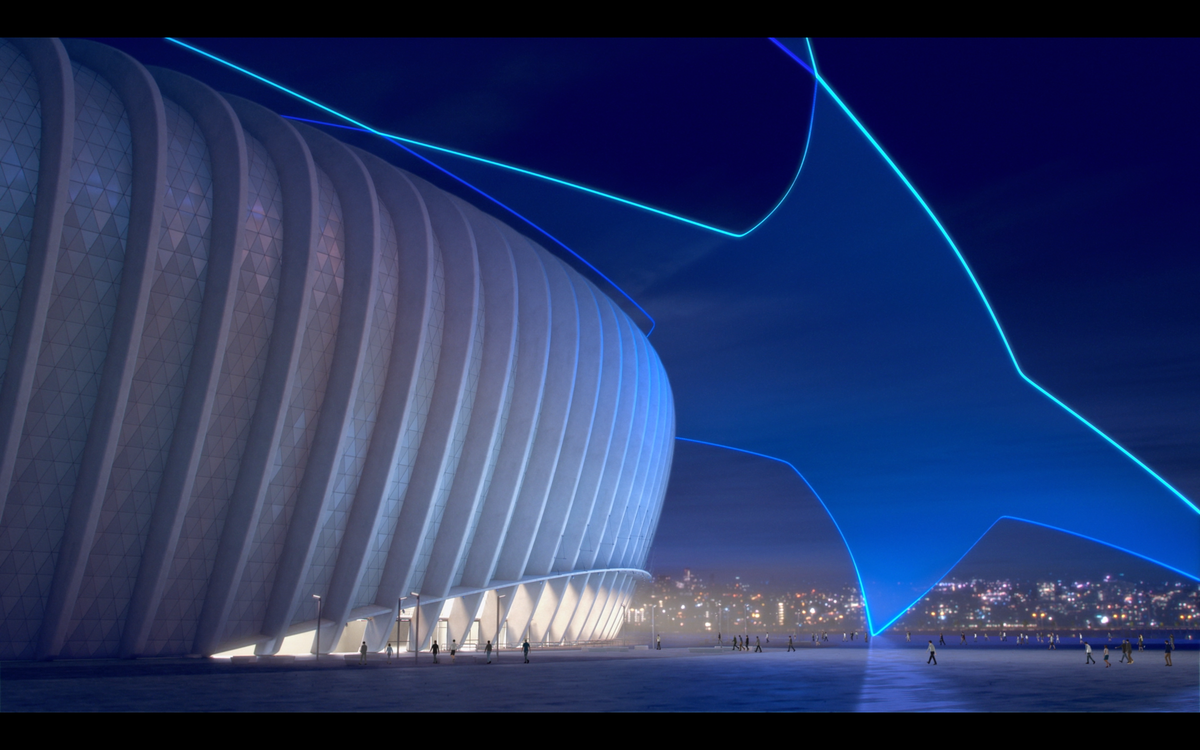
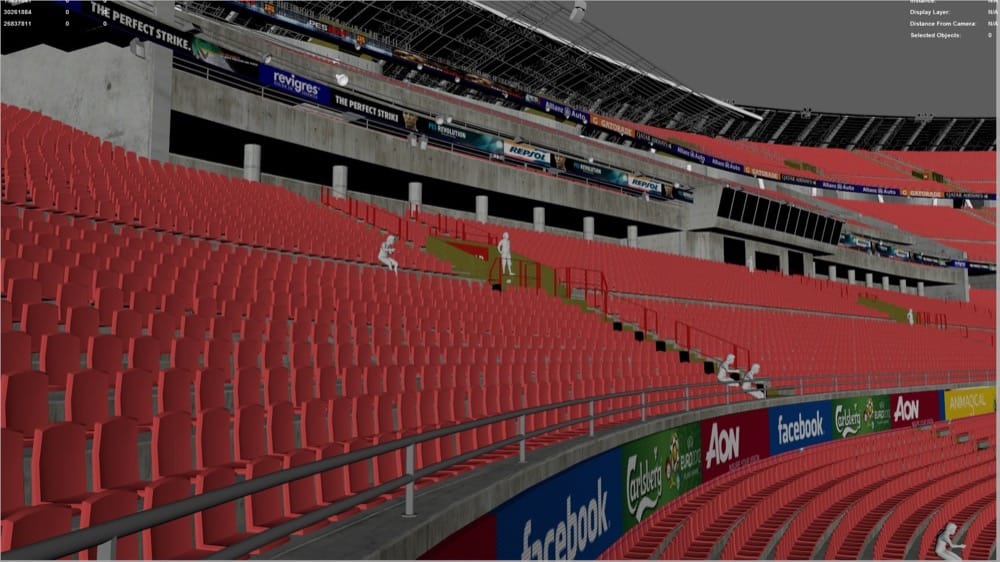
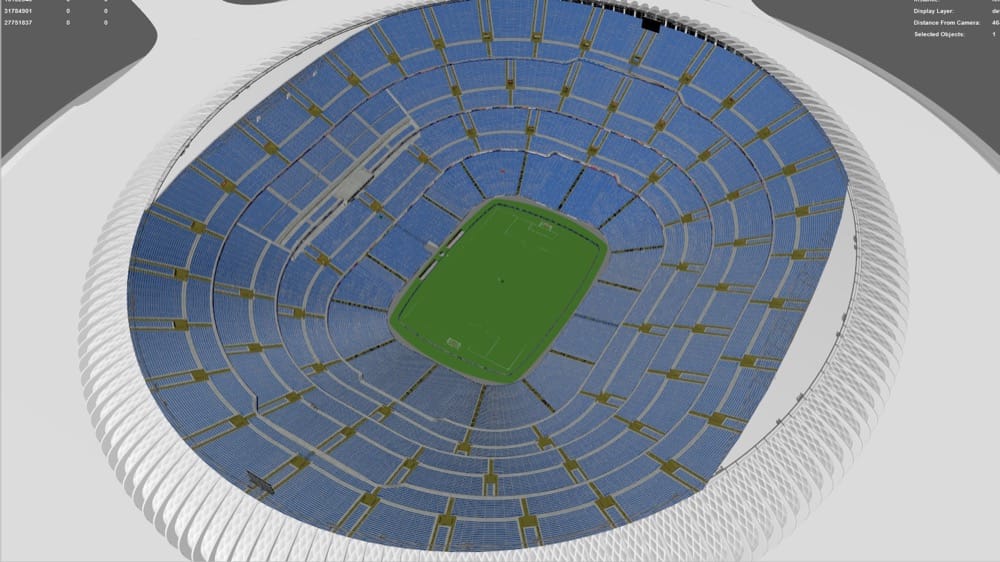
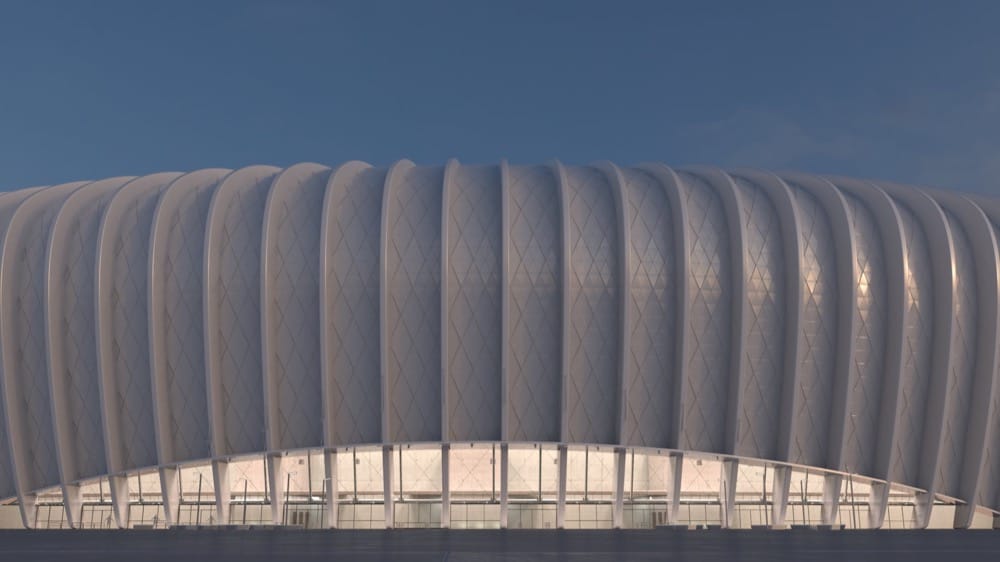
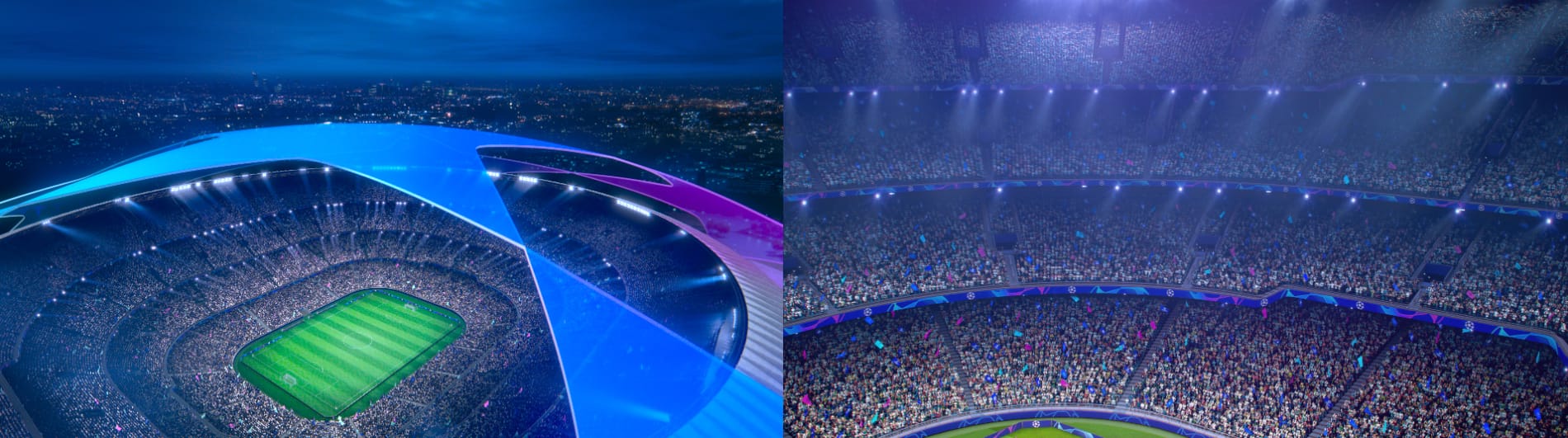
The stadium was where we invested most deeply, because a broadcast asset needs to hold up under scrutiny not just at launch but across a four-year production run — different camera angles, different lighting conditions, different editorial needs.
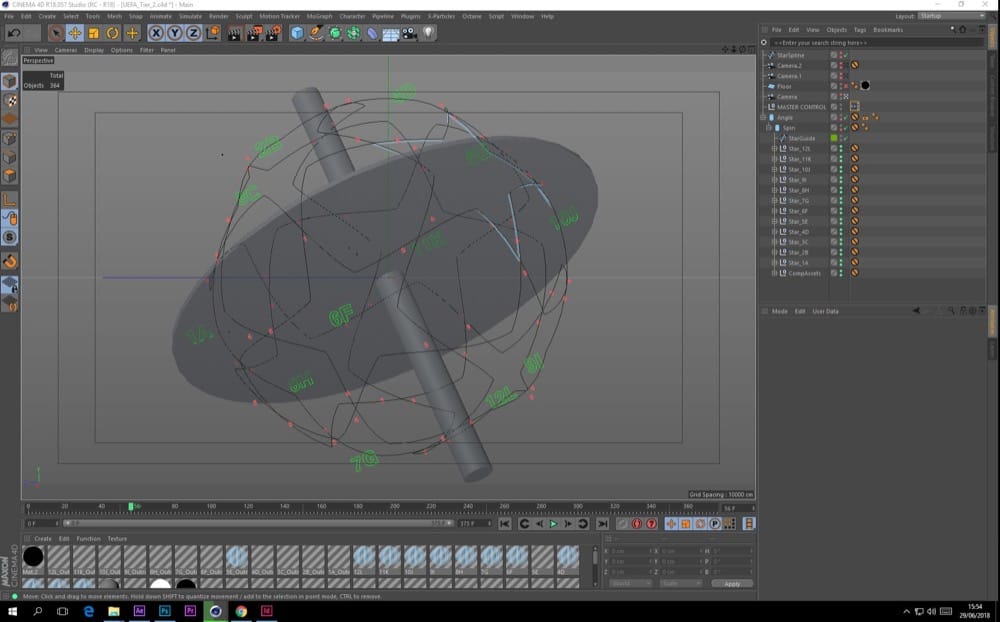
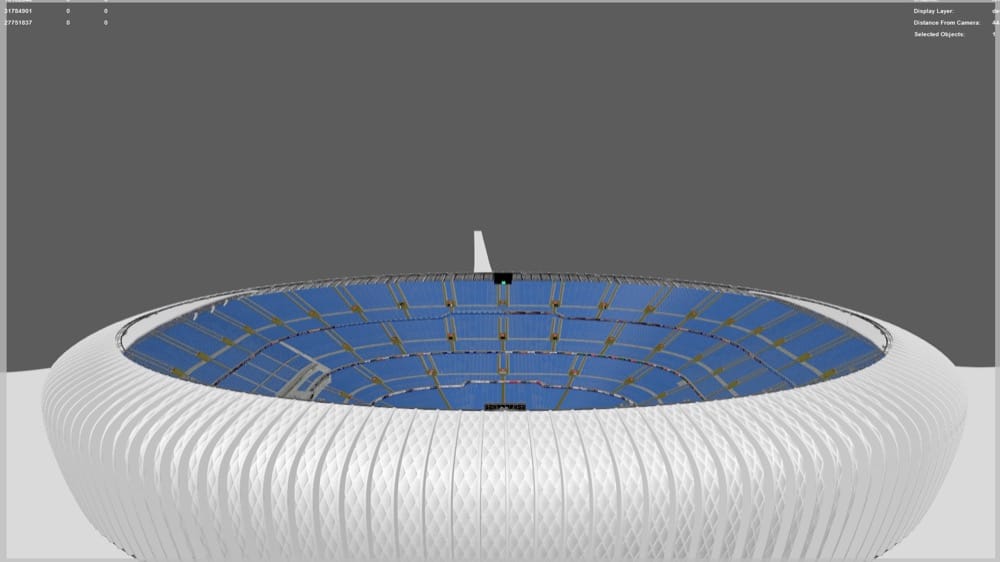
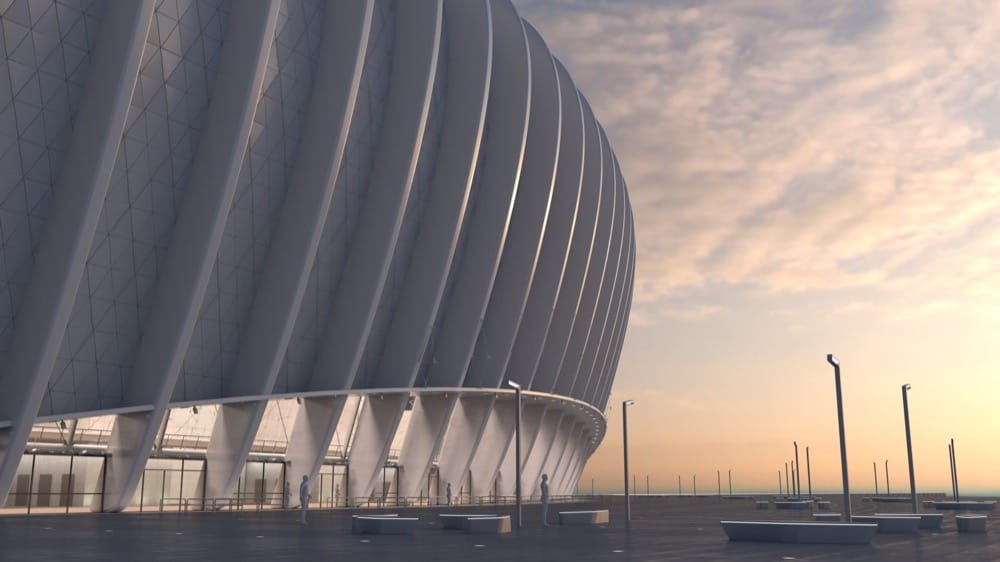
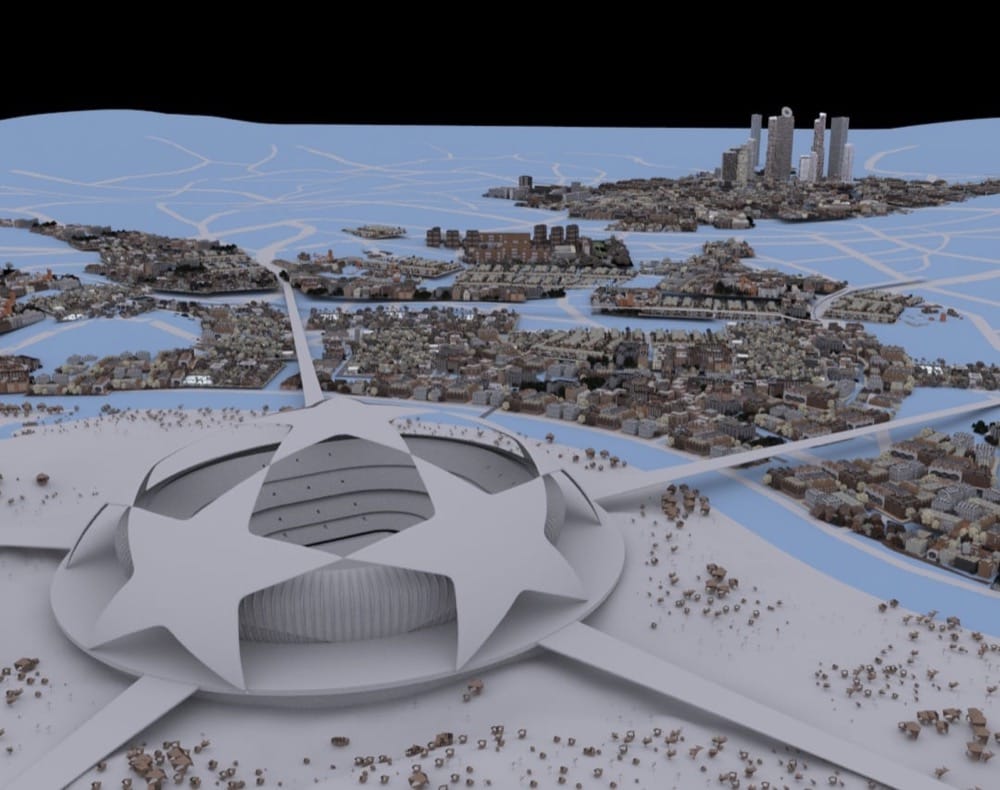
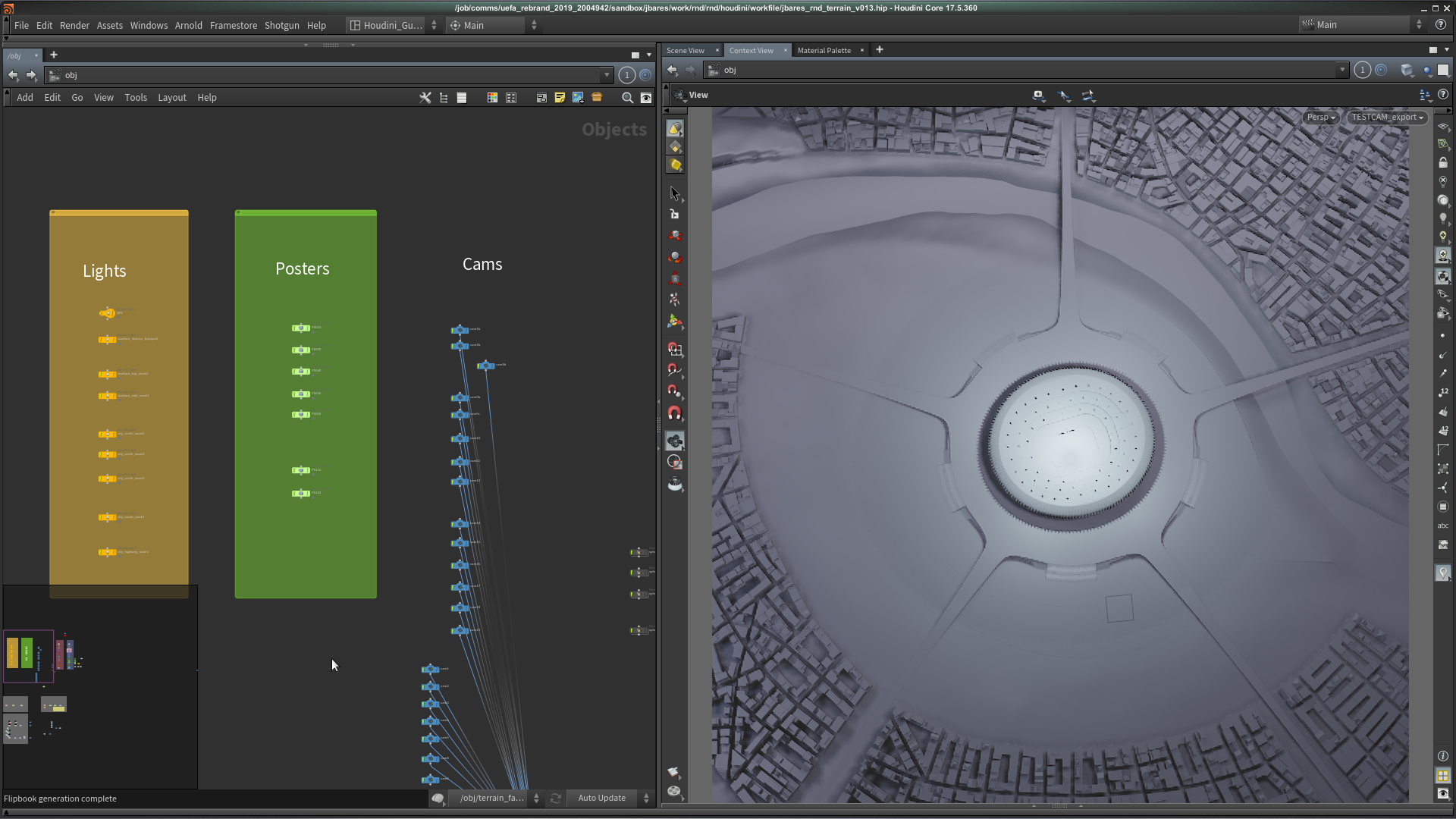
We took architectural cues from the curvature of the Champions League trophy and applied genuine urban design thinking to the build. Working in a fully Houdini-based pipeline gave us the procedural flexibility to sculpt and test, review and revise, with changes propagating intelligently through the system rather than requiring painful manual rebuilds.
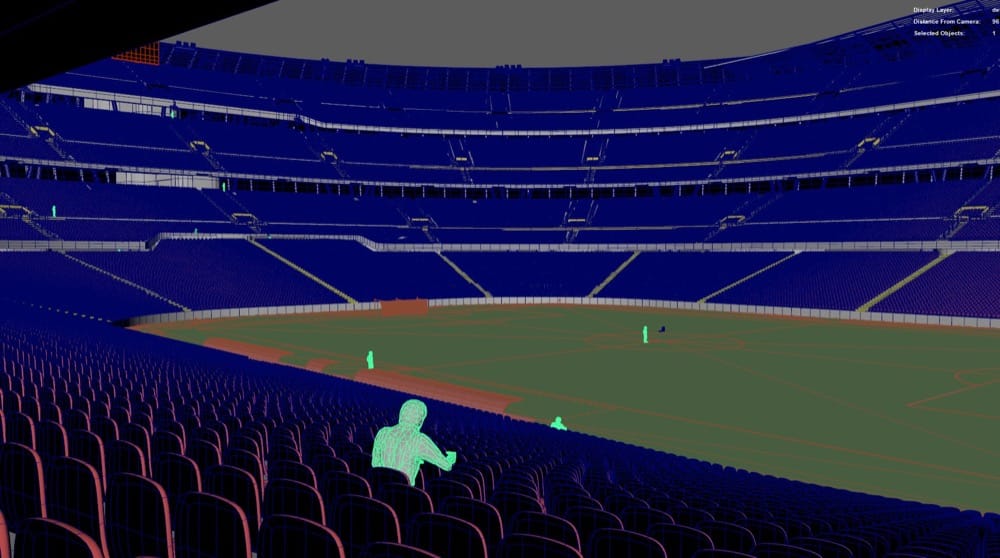
The design of the interior of the stadium was not based on any particular one, and in fact, we extended it beyond what is a normal stadium, making sure this was bigger than life, ending up in 250,000 seats, well beyond any real-life stadium.
Environment
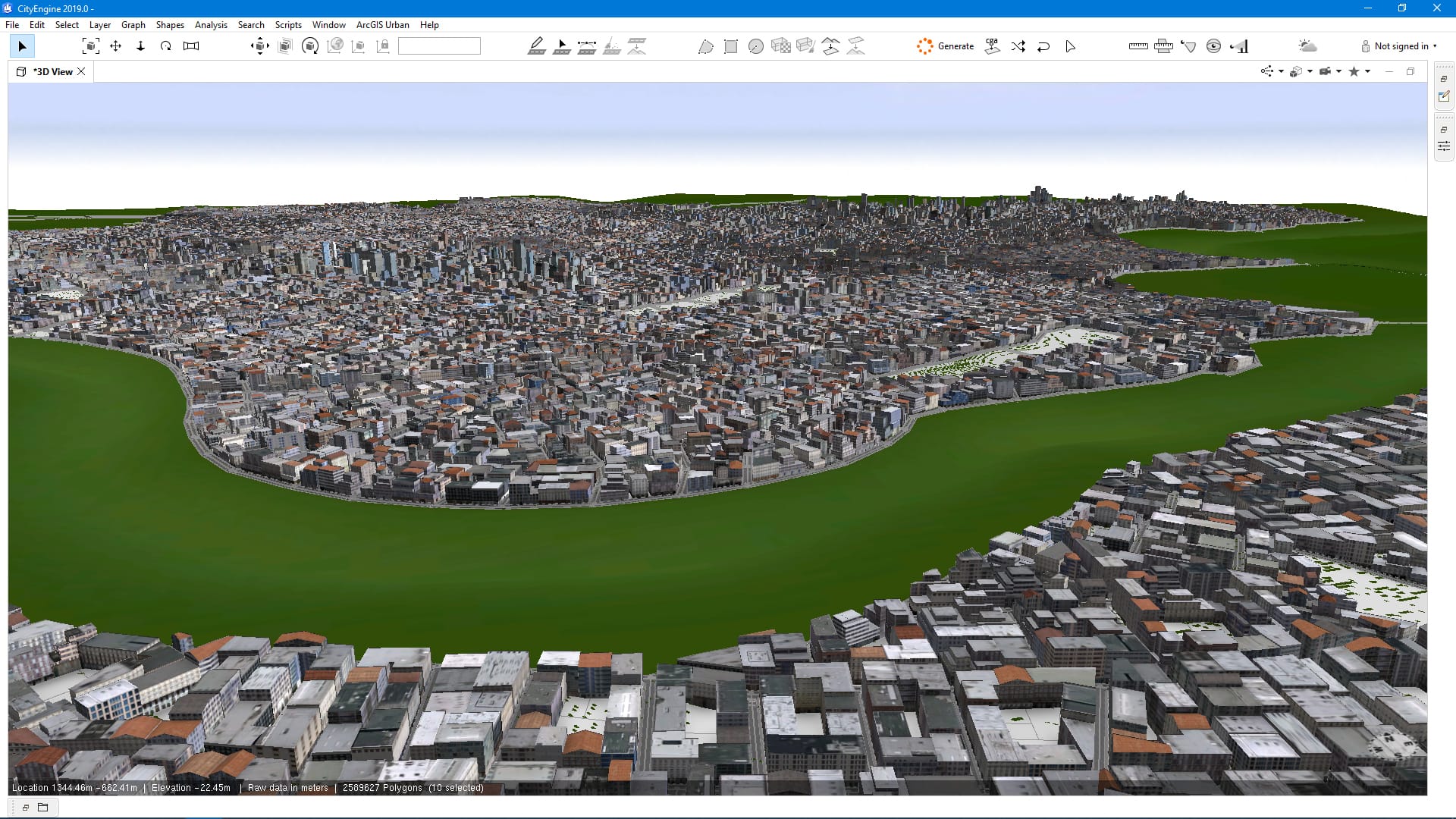
Adjusting a riverbank edge, for instance, would update the surrounding architecture accordingly.
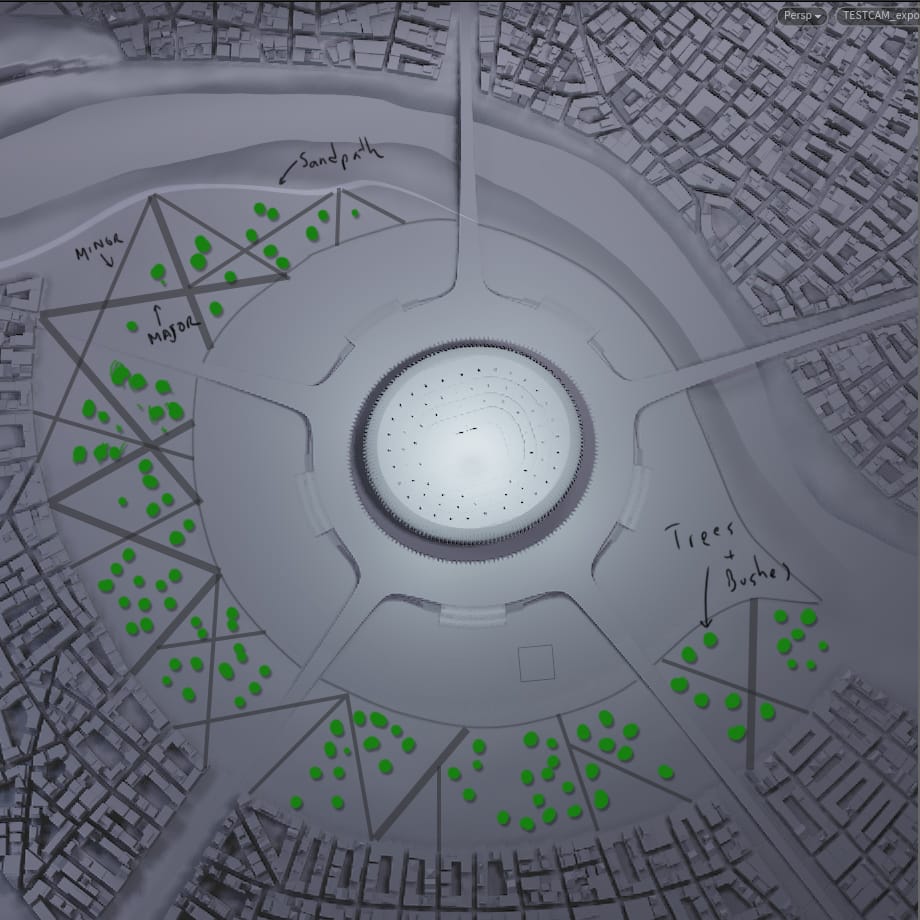
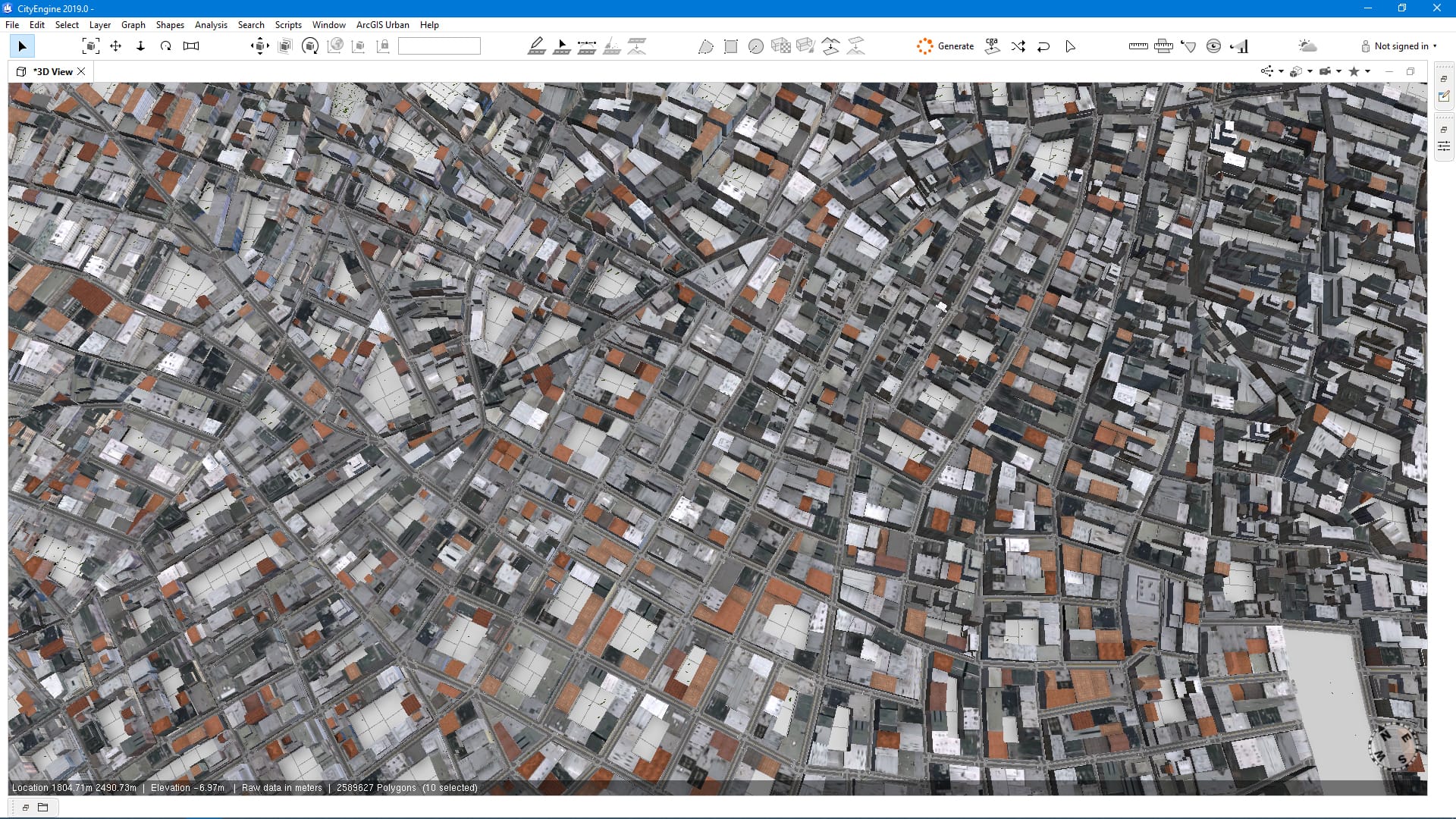
Terrain, vegetation, urban furniture, rivers and streets were all built with this kind of interconnection in mind, so that nothing would feel arbitrary or breakable when a broadcaster decided to push the cameras somewhere unexpected.
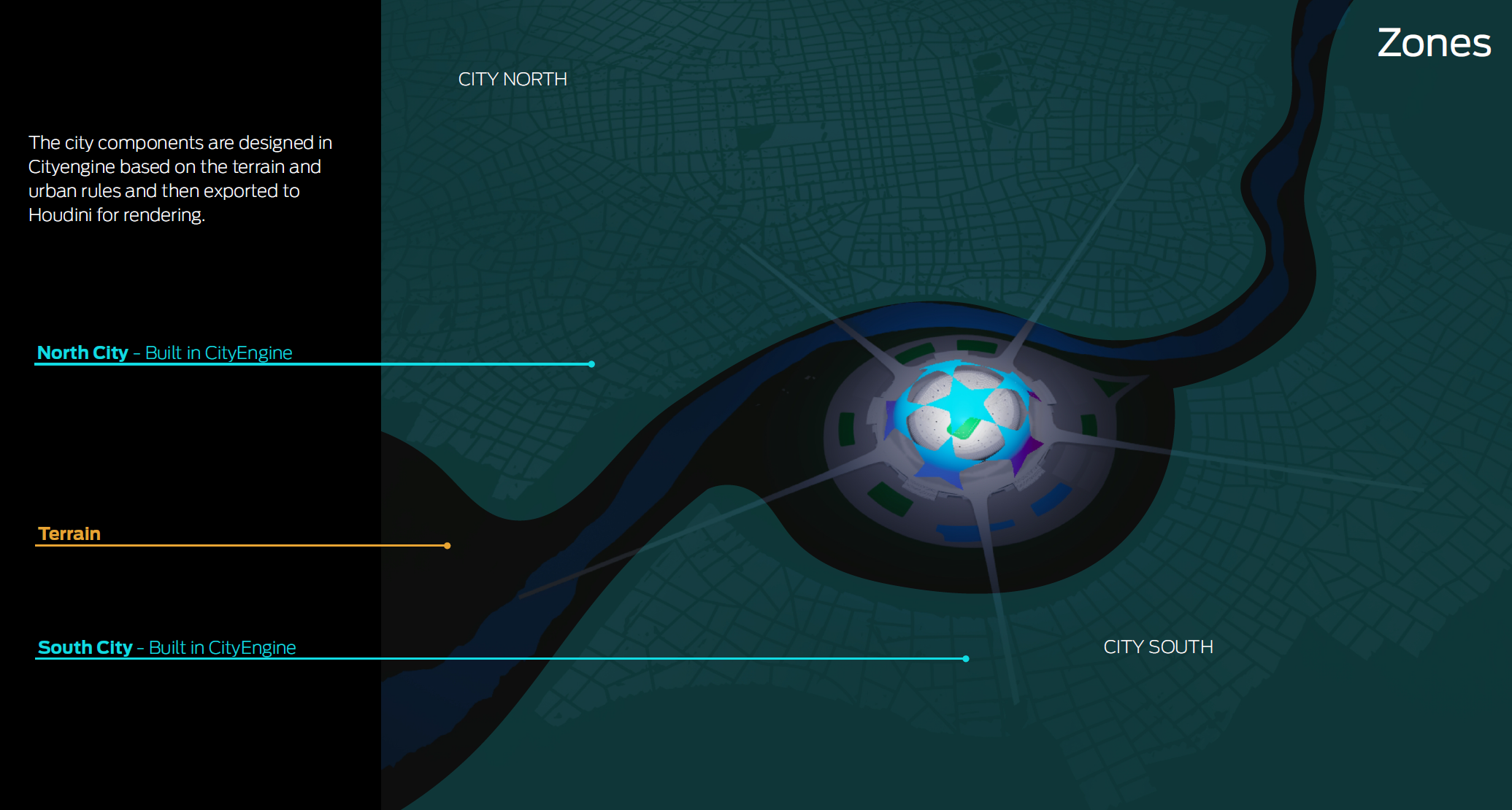
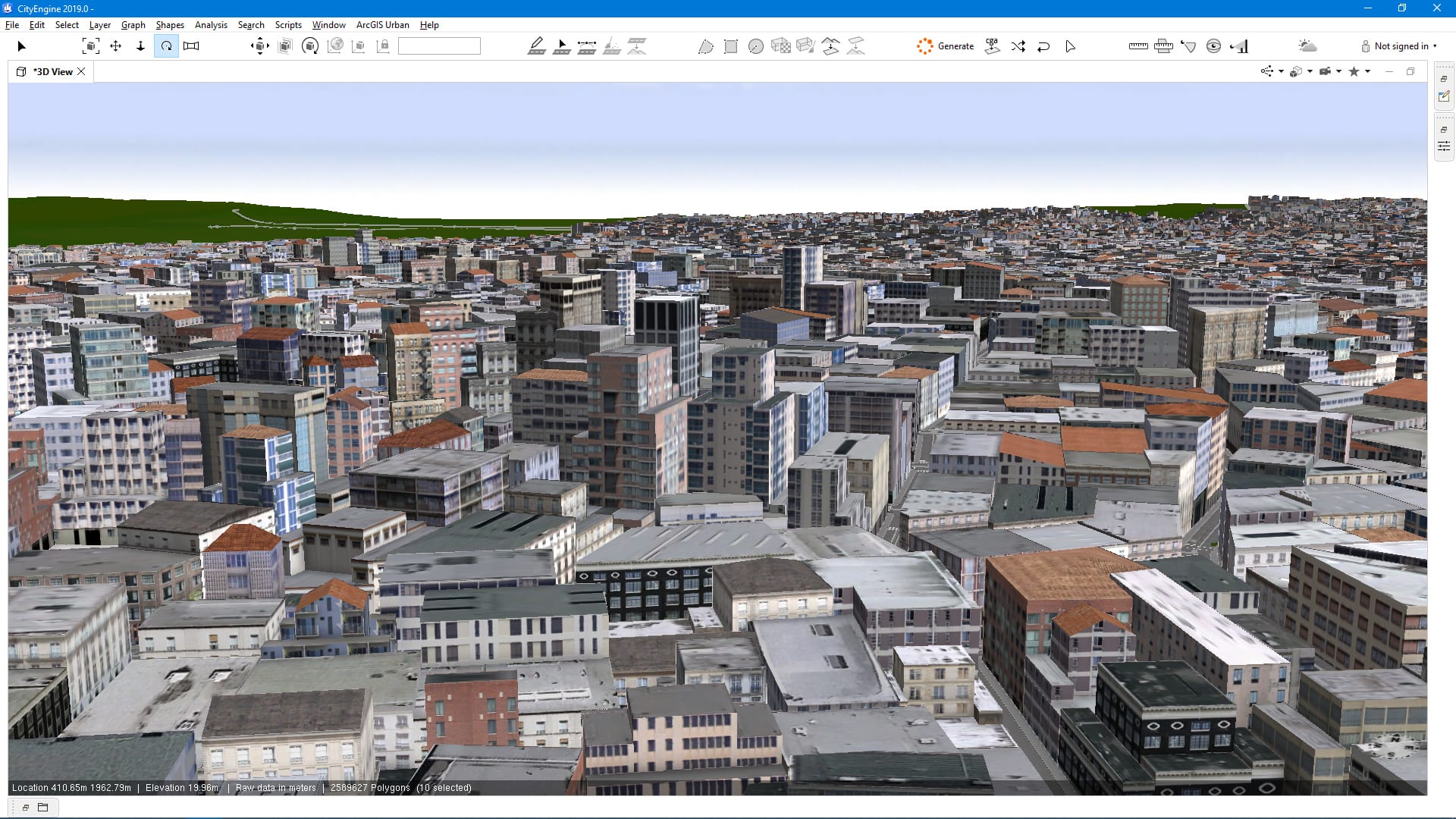
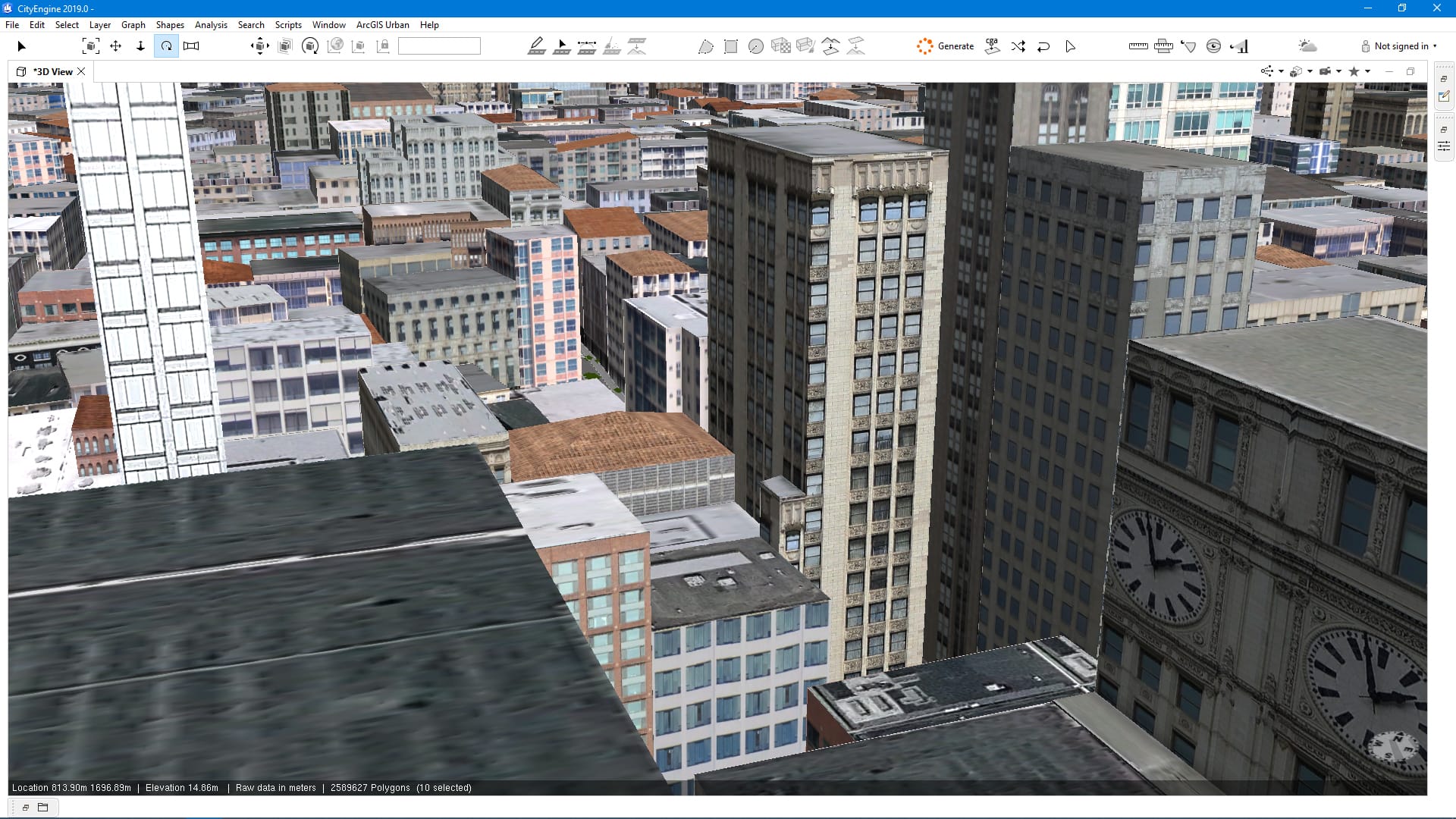
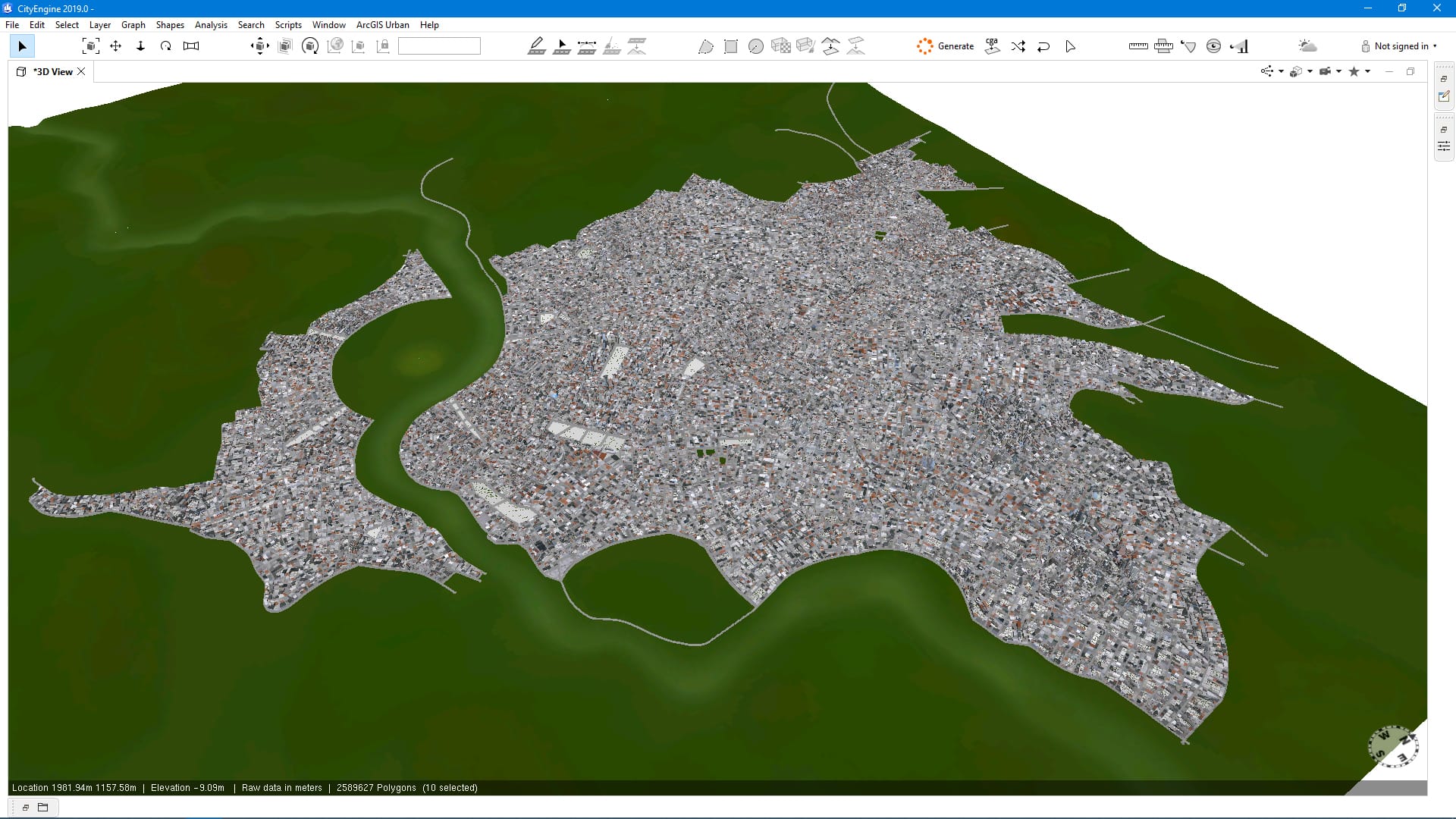
For the city environment surrounding the stadium, we built a complete CGI model in CityEngine — roads, buildings, urban furniture — deliberately avoiding the matte painting approach that can limit where cameras can go.
The goal was to give our cinematographers genuine freedom, which cameras previsualised in Houdini helped us stress-test early, informing us where we needed to concentrate our detail budget before committing to the full build.
Crowds
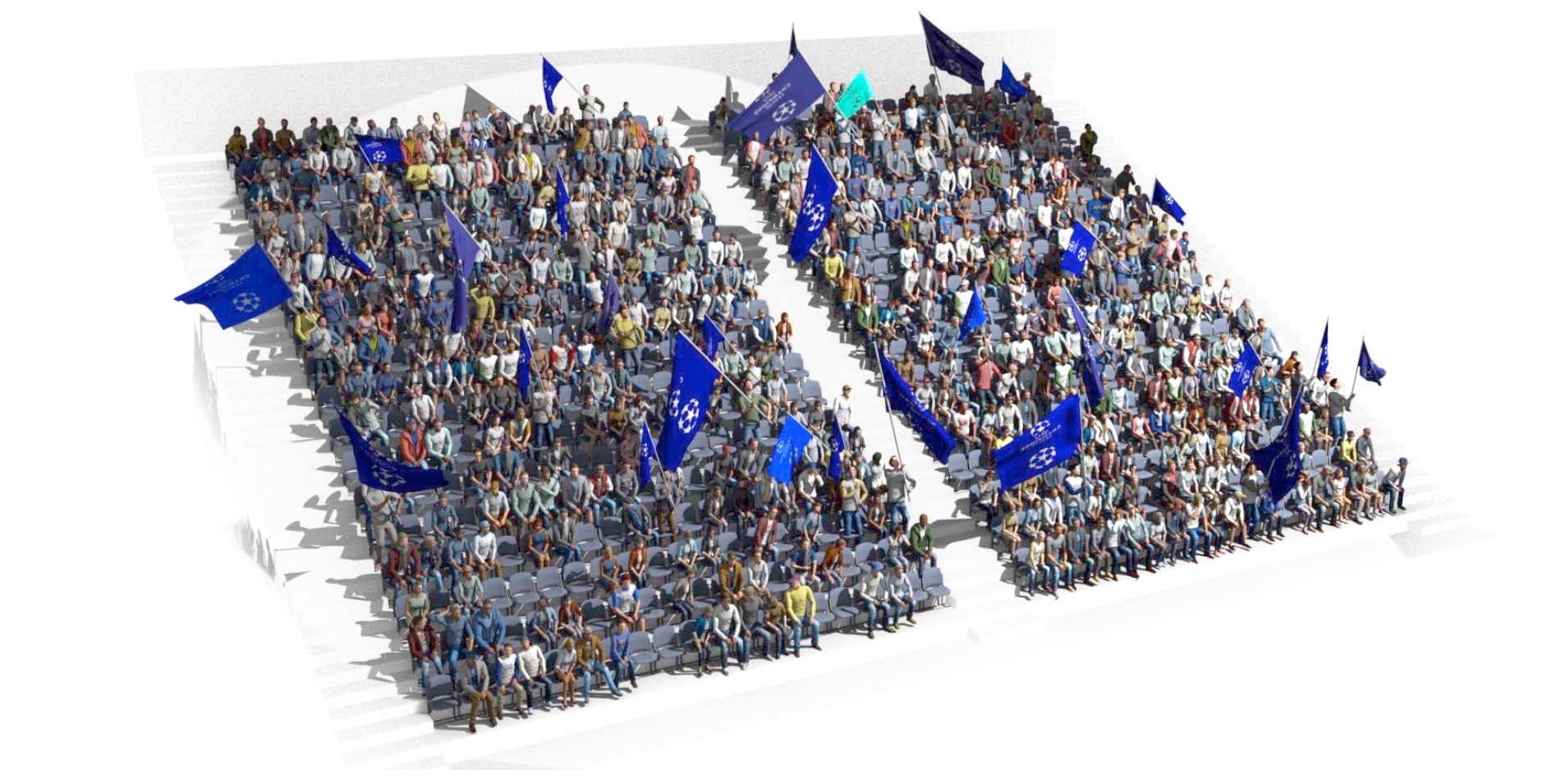
Crowds are easy to overlook but hard to get wrong. We developed ours using Massive Software to have a truly believable behaviour. We based our characters on the standard Massive Agents but worked further in a refined shader detail on fabric wrinkles and folds to a degree that's almost imperceptible in isolation but quietly lifts the overall feel, and optimised the render pipeline to keep things moving at broadcast pace.
It's a project I genuinely enjoy watching on television. Not because it draws attention to itself — hopefully it doesn't — but because every choice in it was made to solve a real problem for the people who broadcast football for a living.
The link has been copied!
Your link has expired. Please request a new one.
Your link has expired. Please request a new one.
Your link has expired. Please request a new one.
Great! You've successfully signed up.
Great! You've successfully signed up.
Welcome back! You've successfully signed in.
Success! You now have access to additional content.